
The last thing I want is to sound supercilious, and yet I have to say something. Addressed, of course, against no one. I once told a friend of mine he seemed to be smoking too much marihuana on a daily basis, and that he should cool it down a bit. He replied to me that yes, he regretted so much smoking, but only because it was smoking, not because it was marihuana. Since I was a fairly heavy tobacco smoker at the time, the point hit home, and I never raised the issue again. In terms of infrapolitics, the complaint is usually the opposite: we are told we never publish enough on it, thus leaving people who want to figure it out deprived and anxious. This is very nice of them. Yes, of course, we are not publishing enough, and we should publish a lot more. But let us put things in perspective. We always thought and said it was going to take about ten years for the infrapolitical project to reach some kind of tipping point or point of saturation, and we have only been at it two years. So I think we are on the right track, even if people do complain rightly. I remember going to a Hispanic Studies conference in the summer of 1987, there was a mysterious panel on deconstruction (mysterious because it was so out of character in a provincial Hispanic Studies conference–even though, after all, it was already 1987, and deconstruction had been kicking around the States for about, what, fifteen years or so). But those professors, bless their souls, proceeded to read papers where they declared Bugs Bunny to be a paradigm of deconstruction among other things: “Bugs Bunny IS deconstruction.” (That was the funniest, not the phoniest) So, they could have said, if contested, that there was not enough clear writing on deconstruction for them to have been able to figure it out rightly, so they made do. But it would not have worked, not really. In other words, what I am trying to say is that the demand for more clarity, more precision, more dissemination, more encyclopedia articles, more definitions, and more examples is all well and good, but it is also an infinite demand whose tendential fulfillment will never satisfy anyone–by the time there were enough materials on deconstruction, deconstruction was deemed worthy of the dustbin of history. It is now kind of back, but that is something else entirely. My point: at this time there are about a thousand pages worth of talk on infrapolitics in this blog alone. We have published two special issues, and I count about twenty published essays on it, I think. And of course we have been discussing the issues at many professional venues–from MLA and LASA to ACLA, to mention only the more visible ones. I think that is enough to prompt an idea of what it is we are up to, for better or for worse. But it does require work, as all good things do except perhaps taking a nap. I do not, however, want to sound sarcastic at all: yes, we take the point, a lot more needs to be done, we have been lazy!! And yet one wonders whether, within the present coordinates in the field, where people become thoroughly acculturated to just a handful of themes to which they call Latinamericanism (say, culture, identity, subalternity, politics: you mix those things up in some way, and you develop a perfectly proper professional position), there is an ear to hear what infrapolitics has to say. My own answer is: probably not. I regret this. Perhaps the problem is not that people cannot see the forest for the trees. The real problem is that we have educated our students to believe that all trees are nice pine trees. But there are other trees out there, some of them beautiful, with obscure shapes that you will only recognize if you develop the sight for them.
Author: alberto moreiras
Some Questions for Infrapolitics. By Stephen Buttes.
 I attended the 2016 ACLA at Harvard, but because my seminar overlapped with the afternoon session of the Línea de sombra seminar on Friday, I unfortunately had to leave the discussions before the conversations had really gotten under way and was unable to attend the Saturday session for the same reason. Such is our fate amid scheduling at large, important conferences like ACLA. But I should say that this was a disappointment for me because there is a great deal I find of interest in Línea de sombra, and I wish I would have had the opportunity to engage in the conversation fully since my own presentation modestly sought to dialogue with some of the claims made in the volume. What follows in my comments below was initially begun as a short response to Moreiras’ recent post “Some comments on the ACLA 2016 discussions,” but it has grown substantially as I started to write it two weeks ago. So, I apologize for the length and also if the comments I make were already addressed during the discussion.
One of the aspects I admire about Línea de sombra and especially his more recent work, such as the essay giving an overview of the infrapolitical project, published in Transmodernity last year, is the ways in which Moreiras continues his attempts to move past some of the limits of the project of subaltern studies. By acknowledging that we all are “subaltern or potentially subaltern in ways that would have been unimaginable only a generation or two ago” (“Some comments,” my emphasis, and more on that emphasis in a moment), he situates the infrapolitical project in a place to deal with one of the limits signaled but unresolved by John Beverley in Latinamericanism after 9/11:
“in the Haitian Revolution the slave-owning planter class became a subordinated group, in the sense that its own identity and interests were coercively negated—its plantations were confiscated, and many of the slave owners and their families and associates were killed and forced into exile. Does that mean that the former slave owners became ‘subaltern’? In a narrow sense, yes, if—to recall Guha’s definition—the subaltern is ‘a name for the general attribute of subordination. . . whether this is expressed in terms of class, caste, age, gender and office or in any other way,’ so that ‘in any other way’ could be understood as including having one’s slaves rebel and one’s plantations seized. But to insist on that point (rather than, for example, to characterize the former slave owners as counterrevolutionary émigrés) would seem to distort significantly the meaning and political valence of the idea of the subaltern” (Beverley, Latinamericanism After 9/11 112).
To think of these particular instances of dispossession as subalternization, Beverley notes, would be a corruption or “distortion” of the term, which for him, and for Ranajit Guha, as Javier Sanjinés has noted, sees “subalternity [as] a euphemism Gramsci used for the proletariat and peasantry” (88). For this reason Sanjinés expands the notion and “along with Beverley . . . [is] inclined to define [the subaltern] . . . as the poor in spirit mentioned in the Sermon on the Mount” (89). This links one version of subaltern studies and its transformation in discussions of the multitude and the marea rosada with Beverley’s account in in Subalternity and Representation (1999) of “subaltern studies as a secular version of the ‘preferential option for the poor’ of liberation theology” (Beverley, Subalternity and Representation 38). Indeed, like liberation theology’s preferential option for the poor, this version of subaltern studies possesses the “structure of the asymptotic curve: we can approximate in our work, personal relations, and political practice closer and closer the world of the subaltern, but we can never actually merge with it” (40). Subalternity can never come fully into view and so cannot be addressed in fullness, an affirmation, if followed to its end, leads to the conclusion that we can never actually eliminate poverty or make the poor and non-poor self same to each other: we can only ever approximate eliminating it. This is because, as Gustavo Gutiérrez puts it,
“poverty is an act of love and liberation. It has redemptive value. If the ultimate cause of human exploitation and alienation is selfishness, the deepest reason for voluntary poverty is love of neighbor. Christian poverty has meaning only as a commitment of solidarity with the poor, with those who suffer misery and injustice. The commitment is to witness to the evil which has resulted from sin and is a breach of communion. It is not a question of idealizing poverty, but rather of taking it on as it is—an evil—to protest against it and to struggle to abolish it . . . . It is poverty lived not for its own sake, but rather an authentic imitation of Christ; it is a poverty which means taking on the sinful human condition to liberate humankind from sin and all its consequences. (Gutiérrez 172, my emphasis)
Voluntary poverty, or “spiritual poverty” (the “poor in spirit”), is “an ability to receive, not a passive acceptance” of “the Lord” (171) and “above all total availability” (171) to that messianic witness.
Confusingly, this model of justice both requires poverty and also requires that no one actually be poor (that is, exploited or dispossessed). Poverty must always appear and be present because it is what produces the justice of the community: “[it is] not a question of erecting poverty as an ideal, but rather of seeing to it that there were no poor” (173). But poverty itself is “an act of love” (172) and indeed is the process by which the community can carry out the eschatological project set out by the Messiah and as a consequence cannot be eliminated. In other words, the poverty that appears in a truly just society—one that has eliminated exploitation—must be voluntary poverty, spiritual poverty: openness and incompleteness. But this category of poverty must necessarily be treated as if it were real, as if it were material poverty: “the meaning of the community of goods is clear: to eliminate poverty because of love of the poor person” (Gutiérrez 173). This is not love of the saint but love of the “marginated.” The poor must appear so that there can be no poor. In this sense, poverty can only ever be eliminated through something paralleling the painterly technique of trompe l’oeil. In this model of justice, the poor must appear as if they were exploited, and the community must believe that their poverty is a sin, but the poor must in actuality be voluntarily poor, be Christian witnesses employing an act of love. They must be an “an authentic imitation of Christ,” a trompe l’oeil representation of poverty: “being rich, [but appearing] poor,” material plenty appearing as lack, fullness and completeness as its opposite. We can only approximate closure so that closure is possible: the asymptotic curve.
This model, however, creates a difficult dilemma. Who, might we say, is choosing poverty of their own free will? How should we distinguish the person who loves their neighbor (voluntary Christian poverty as “an expression of love” (172)) from the one who is exploited by their neighbor (“material poverty” (171) as “a scandalous condition inimical to human dignity” (165))? Who is functioning as the necessary witness to justice and who is the victim of injustice? Who is “[living] . . . as an authentic imitation of Christ” (172) and can redeem the corrupted society and all the consequences of that corruption and who is victim of dispossession? How can we calculate these differences?
These questions, of course, make it perfectly reasonable to ask about what we should do with ruined oligarchs and white collar criminals and the flotsam and jetsam of the upper crust who are forced to work for a living after a crash or a revolution, and Beverley notes as much in the footnote that follows the passage I quote above: “[This] is not to say of course that elements of defeated classes, or of elite classes in decomposition, such as the petty nobility in the transition from feudalism to capitalism, could not migrate in class status terms to form part of the subaltern sectors of a given society” (141 n6). But it also makes Beverley’s demand that we distinguish who is voluntarily poor (the necessary witness) and who is not, who is a “counterrevolutionary émigré” and who is a victim of dispossession a difficult one to mesh with this earlier (and abandoned?) version of subaltern studies, which is why I suspect he makes the claim for a postsubalternist age and maintains little or no mention of Gutiérrez in the more recent book.
This dilemma is also where the infrapolitical intervention, as I modestly understand it, seems to fit, responding to the metaphysical and spiritual dilemma of voluntary poverty with an account of the marrano, with an account of those who do not quite fit into the regulated archives and structures of society, the remainders of projects of modernization: we are all potentially subaltern because the eschatologies of justice that structure society can always be captured. Línea de sombra, like liberation theology, views the possibility of the world in the poor, or, as it has more broadly been pointed out, in “all infrapolitical lives,” the “potentially subaltern,” those lives which cannot be properly political in existing modes of calculation and regulation. Might this share a genealogy with the “poor in spirit” that has “[a] relationship to the use or ownership of economic goods [that] is inescapable but secondary and partial” (Gutiérrez 171)? Perhaps, but unlike liberation theology, infrapolitics rejects communitarian forms of justice, championing unrepeatable forms of singularity, rejecting any mode of capture. The poor are the possibility of the world because they maintain an openness to the (denarrativized) world to come whatever it may be: the messianic structure without messianism.
This is a deeply compelling way to view the world, and it is for this reason that these points of view have been gaining so much attention and are being widely adopted in contemporary literature and culture, despite the vague claims of a field-wide resistance to the infrapolitical that Moreiras asserts in his recent post.[1] What is so attractive about the infrapolitical project is the notion of the “minor adjustment,” the notion that there is a “pequeño ajuste infrapolítico” that is hiding in plain sight and already in all of us, the notion that the liberation of the world and the solution to exploitation and domination will emerge through a minor change, the notion that the world to come is just the same as this world but a little different. This idea, of course, owes one portion of its genealogy to Walter Benjamin, and for this reason the “minor adjustment” has emerged as a popular idea in contemporary culture, present in a wide array of contexts and texts like Ben Lerner’s recent novel 10:04 (2014), which, through its engagement with Agamben’s The Coming Community, cites as its epigraph Benjamin’s famous anecdote discussing the Hassidim’s vision of the Messiah’s world to come, which like the infrapolitical claim, sees that future as just the same but a little different: “The Hassidim tell a story about the world to come that says everything there will be just as it is here. Just as our room is now, so it will be in the world to come; where our baby sleeps now, there too it will sleep in the other world. And the clothes we wear in this world, those too we will wear there. Everything will be as it is now, just a little different.”
An example of this dynamic appears about halfway through the novel (but really all throughout), when we meet a character named Noor, an Arab-American co-worker of the narrator-protagonist, to whom it is revealed that Nawaf, the Lebanese man she had been told was her father, and with whom she had always identified racially and ethnically, was, in fact, her adopted father, and that the identity of her biological father, a white man named Stephen, meant, in her view, that she had no claim to the Arabic-speaking world and Arab culture with which she had identified her entire life. This “minor adjustment” to her biography led her to begin “seeing [her] own body differently” (104), an invisible change that denies her “ownership” of a past (her own) that she feels she wrongfully claimed, even though nothing else about her lived experiences nor her beliefs about the Arabic world had changed: her world was the same but a little different. For example, when asked to speak about the Arab Spring at an Occupy protest, she felt she had no right to do so given this (invisible) revelation about her past, and she remained silent as a “new” member of a racially powerful group, as a “new” member of the group of imperialists who appropriate culture for their own ends.[2] And she compares this to a friend who felt wronged by his brother and who, in seeking to confront him, finally managed to tell his brother during a mundane cell phone conversation everything he’d been feeling for so many years. Towards the end of his cathartic airing of grievances, he realized, to his horror, that this deeply emotional experience—“a major event in his life” (107)—actually hadn’t taken place: the cell phone call had dropped before the brother could hear anything: “it happened but it didn’t happen” (107). And the brother, like Noor, must figure out how to live in this transformed world, which is really no different from the world before the transformation, in which major, life changing events happened but did not happen: they remain invisible to all except a singular witness. Their task is to prepare themselves to confront the transformations they recognize in the world. In these silences—Noor’s silent presence at Zucotti Park and the brother’s sudden absence from the cell phone call—we can hear an echo of the world Línea de sombra describes: “la posibilidad mesiánica del fin de la subalternidad en contraimperio es lo que no toma lugar, lo que está sujeto a un retraso infinito” (Moreiras 209). Infrapolitics is a constant preparation for “accounting for what was never on [the world’s] radar in the first place” (Moreiras, “Some comments”).
These infrapolitical intonations, of course, appear outside the literary realm as well, perhaps, I cautiously want to suggest, in Richard Thaler and Cass Sunstein’s now-famous book Nudge (2008). Using behavioral science, the book argues that through invisible modifications to the “architecture of choice” in both government and free markets policy makers and companies can significantly reshape the world. As an example of one of these “nudges” in “choice architecture,” Sunstein points to the mundane task of filling out forms for a driver’s license. Here, there is still a box to check relating to organ donation, but it is slightly modified: instead of opting in, one has to opt out. Instead of actively choosing to donate life-giving organs, instead of imagining one’s own heart in the body of another, instead of imagining ourselves become another—instead of thousands of dollars spent on marketing campaigns meant to mobilize this empathic or affective identification that would produce the necessary minor move of the pen or the mouse to choose yes— one has to negate, to actively choose not to donate life, to actively deny ourselves, which, through the transformation of the default option, through a shift in our immanent field of existence, has already been given to another. Here, the world is just the same—a box to check—but a little different: instead of choosing to give ourselves to another, we already have, but the choice remains: to give or not to give, movement and action are still possible. By making paternalism invisible—by modifying the “choice architecture” so that no one needs to decide on things about which they may or may not have beliefs, by making it so that no one need ask themselves if they have any beliefs at all, and by nudging and modifying habits by intervening with a modified default option—the invisible baseline around which society organizes itself transforms, and the “world reorganizes itself around you” as Lerner puts it time and again in his novel.
But as Sunstein points out in his more recent book Simpler: The Future of Government (2014), invisible paternalism—the invisible nudge in the restructuring of choice architecture—simply acknowledges the fact that most choices—indeed a good number of bad choices—are made because the truth of a situation—the clarity of the choices available—is distorted or obscured through existing modes of calculation. There are important aspects of all situations that remain invisible, and good governance must integrate, that is, must make these characteristics visible through the invisibility of the architecture of choice. A key example of this imperative is Sunstein’s description of the famous “invisible gorilla” experiment. Here subjects are asked to count how many times a basketball is passed between a group of players. In the middle of this, a person in a gorilla suit enters the scene and then leaves. Most subjects calculate the right number of passes, but they completely miss the gorilla. (The experiment is here: http://www.theinvisiblegorilla.com/videos.html). The gorilla is beyond calculation because it cannot be described in the number of passes: it is simply not on the radar of those participating in the experiment. It is precisely for this reason that the White House—seeing the power of incorporating into choice architecture the gorillas we are likely to miss, the benevolent paternalistic witness who sees the gorillas we cannot—has transformed the nudge into a properly political tool: the possibilities for a progressive politics are always based on what is beyond existing modes of calculation, what is open to infinite modification.[3]
It is clear that the nudge shares something with the infrapolitical “minor difference”: transforming the world not by force but rather through the minor adjustment, they both prepare the ground for the world to come. But their differences are also fairly obvious: while one is a form of messianism (or paternalism), the other maintains a messianic structure without messianism; while one is a mechanism of control, the other is a mode of freedom; while the former is unabashedly managerial, the latter stakes a claim to the pure possibility of politics and a truly just world; while the former emerges from the behavioral and social sciences, the latter emerges from philosophy and literary and cultural studies. But these differences, if I understand Moreiras’ most recent comments correctly, cannot be made to matter, for these are ultimately academic or “straightforwardly political” debates. What can count as evidence, modes of access to truth and the importance of choosing one mode of expression (a novel) over another (a graph, a survey, an algorithm, an experiment) are all part of modes of regulated knowledge production; choosing what information to make visible to consumers or lawmakers (“just the facts” or “an argued position”) are part of political debates. To focus our attention on any of these issues, that is, to focus on what is currently visible would be to miss the “gorillas in our midst,” which is what is truly important.
And it is from here where one of my points of disagreement with Moreiras begins to become clear. Because for Moreiras, these differences only matter artificially, can only appear to matter and in fact are a product of dominating, managerial claims to knowledge. To decide whether something is a novel and therefore engaging particular kinds of constraints and approaching a problem from a particular point of view, or to decide that something, on the other hand, is the product of a series of experiments misses the gorilla for the passes: the truth of the world is “out there” in “the world,” in life itself which cannot be completely known and can never be knowable through the micromanaged institutions of the university and government that seek to calculate how many times the ball was passed, what counts as the humanities and what counts as the social sciences and so on. As Moreiras points out in his reflections on the ACLA seminar:
there is no ivory tower. The university is no more than a symptomal torsion of the wider society. Which is why infrapolitics must abandon its original roots in university discourse, exit disciplinary configurations, and break away from any attempt to surrender at the capture of thought through increasingly domesticated, indexed, regulated, venued, and analytically-ranked self-insertion. This is one of the reasons why infrapolitics claims a savage terrain of engagement, beyond fields: because it understands that battles internal to university politics are always already rigged, always already lost battles. Hence infrapolitics prefers to hide in the plain sight of the world at large, and reflect away from any regulated archive: the real struggle is out there, particularly if we manage to escape from the boredom that threatens us from the rear, and from the sides. (“Some comments,” my emphasis)
On the one hand, there is no autonomous university discourse: “there is no ivory tower.” The university is the “wider society,” the modes of thinking that populate the university are the modes of thinking that belong to the “world at large.” And so it follows that university politics—the disciplinary border wars, if you will— are politics that have already collapsed into the world at large. But if the university is already heteronomous—if there is no ivory tower—in what sense can we claim, as Moreiras does, that there are still “battles internal to university politics” (“Some comments,” my emphasis). If we take the infrapolitical claim seriously, that the “real struggle is out there,” we also must say that the real struggle is also “in here” given that the university is the world—there is no ivory tower—and the world the university. Indeed, if we are all “potentially subaltern,” if the point of infrapolitics is recognizing the ever-shifting minor difference or nudge that sends us careening one way or another, it would seem that the space of engagement would not really matter at all: all battles are already lost, all modes of thinking already corrupt, everything already managerial, everything already controlled. I suspect that it is for this reason that the infrapolitical seeks to escape the boredom of what Moreiras calls here “regulation,” and the futility of already existing, already managed modes of thought to focus instead on that which escapes (something always does, Jon Beasley-Murray tells us), that which remains invisible, that which is pure potential, that which is free of all constraints. Infrapolitics tells us to search continually for the “invisible gorilla,” an object that may never appear in “gorilla form,” that may only ever emerge as the Augenblick—the blink of an eye—(as Patrick Dove has termed it, following Jacques Derrida) or as the figure that brushes against us and comprises a “secret index” (as Kate Jenckes has termed it, following Walter Benjamin).
But this is to imagine that as long as it remains invisible, undetected and off the radar that it remains free of constraining choices—that it is pure potentiality, that it is unchosen—and we are guaranteed an escape from capture and a path to secure the liberation from eschatology: the Augenblick, the passing touch, all infrapolitical “immaterials” (for lack of a better word) create a usable potentiality. But these usable potentialities, as Ignacio Sánchez-Prado notes in his recent critique of Rancière and infrapolitics, creates what he calls a fetish—“a form of thinking the political that fetishizes the undoing of power as a value in itself” (“Limitations of the Sensible” 375)—and what I argue we can call an icon: “an object that matches (is just like) the sign itself” (Ghosh 66), but a little different.[4] Of course, the infrapolitical icon is not exactly an object—“It names the threshold of the visible—the closing of the eye is also the prelude to its opening—and, thus, cannot itself become a possible object of vision” (Dove, “Aesthetics, Politics, Event”)—but the threshold, a passage that functions in the way that icons do, a product of the desire to escape that motivates the infrapolitical reflection. That which escapes regulation, visibilization through the metaphors chosen to organize the world—the unthought thought, that which “what was never [on the] radar” (“Some comments”), freedoms that remain beyond writing (Williams, The Mexican Exception), the unfinished manuscript (Cometa, “Non-finito”), averroist intellect (Muñoz “Esse extraneum”) and so on—always remains invisible, and as a consequence always emerges as something that looks like the thing it is: real life beyond calculation, beyond visibilization, beyond metaphoric capture. In other words, it is the image, as Dove has called it. This image, of course, is characterized by its invisibility, by its ability to be sensed but not seen, experienced but not known, used but not valued. In other words, infrapolitical “immateriality” becomes iconic in its invisibility, in its immanent potentiality, through the fact that the “infrapolitical minor adjustment” looks something like the Borgesian revelation that doesn’t take place, or like, if I can be a little more concrete, “The Unending Gift” memorialized by Jorge Luis Borges in Elogio de la sombra (1969).
The “gift” that gives the poem its title is a landscape painting that the Argentine painter Jorge Larco promised to Borges before Larco’s death in 1967 and which Larco never completed. What we see in the gift Borges cherishes is not the thing itself—an iconic landscape fully realized in watercolor—but rather the promise of the painting and its escape from full realization: “si [el cuadro] estuviera allí, sería con el tiempo una cosa / más, una cosa, una de las vanidades de la casa; / ahora es ilimitada, incesante, capaz de cualquier forma y / cualquier color y no atada a ninguno” (984, my emphasis). This, of course, sounds quite a bit like a map of the invisible, savage, uncapturable terrain of the infrapolitical, almost literally evoking the Derridean promise, an icon that is usable but not interpretable.
And yet, as Borges points out, despite this escape from habit, despite the landscape’s full invisibilization and despite the guaranteed “imminence of a revelation that [will never] produce itself” given that Larco died before realizing the work and fulfilling his promise, the painting has already been captured by existence. “Existe de algún modo,” Borges tells us, and this “de algún modo,” this mode of existence is what makes possible the transposition of gods and men Borges imagines (parenthetically) in his poem: “Sólo los dioses pueden prometer porque son inmortales . . . También los hombres pueden prometer, porque en la promesa / hay algo inmortal” (984). These temporal landscapes are linked with eternal ones through the linguistic “de algún modo” that imparts its “algo inmortal,” but it is clear that we should not confuse the signified—“the unending gift” of the absent landscape painting, the immortality or eternity of Larco’s infinite promise, the imminence of the revelation that will not produce itself—for any particular signifier, which can arbitrarily be evoked by “cualquier forma y / culaquier color,” and perhaps “cualquier hombre” as repeated singularities in time: a messianic structure without messianism.
But, if I am reading this poem as the infrapolitical approach would ask, what also becomes clear is that all of these singularities do not escape an eschatology: all of them are incorporated into the gift, into the infinite, eternal whole that is the unending landscape painting, Larco’s promise or gesture: the gift that functions as a mode of passage, a metaphor of metaphor itself, or more simply as a gap between what Moreiras calls in “Mules and Snakes” the saying and the said. These unrepeatable singularities or intonations are incorporated into this absent or indeterminate whole but also can never be domesticated into yet one more of the “vanidades de la casa” because there is always a new gap, a new approach to glimpsing what Moreiras calls in his essay “Mules and Snakes” “a non-caputrable exteriority” (“Mules” 203). This gap that Moreiras describes in that 2005 essay, this gift that escapes capture and is “non-capturable” defines what I understand as a version of infrapolitics, a version that he does “not hesitate to call neobaroque” (224).
Following this logic, I want to suggest that an infrapolitical reading of the landscape painting produces an iconicity that parallels Baroque hagiographic imagery. As Lois Parkinson Zamora points out in The Inordinate Eye, Baroque hagiographic images are premised “upon the separation of the image from what [they represent]” and their ability to “point to invisible realities but . . . not to be mistaken for those realities” (Parkinson Zamora 172): they are a mode of passage to the world to come. As Parkinson Zamora demonstrates in her reading of Frida Kahlo’s repeated, visceral self-portraits that parallel the Baroque tradition of serial portraits of suffering martyrs and virgins, the Neobaroque replicates “the process of metonymic displacement typical of the Baroque” in which the “association accumulation, and diffusion” of repetitive but individualized portraits serve to make visible an “indeterminate or absent whole” (186-87) to which new portraits, new fragments and, following Moreiras, new intonations can continually be added. These (Neo)baroque icons always maintain certain characteristics. While in Baroque iconography it is the situation of the death of the saint, in infrapolitical iconography it is what is sensed in the “sacredness of man”: the echo, the glance, the might have been, the intonation, the Augenblick. This creates a dynamic relationship between artwork and beholder that is theatrical in nature, a potentiality that can be created again and again in and on one’s own body as Borges does, metonymically relating the singular to an “indeterminate or absent whole:” “Vivirá y crecerá como una música y estará conmigo hasta el fin.” And here we can hear an echo of the discussion of subalternity above: el fin = el retraso infinito; or the asymptotic curve Beverley evokes from liberation theology. An end that is not an end because it can (and must) always be recreated in the gap between the saying and the said, in the gaps between the interlocking illusions that produce the Neobaroque spaces of our “world theater.”
Seen as a Neobaroque icon of potentiality and passage, the infrapolitical does not avoid the eschatology that Moreiras seeks, because the recognition of immanence always requires a witness, a particular kind of viewer: the marrano, the unbelieving beholder, the remainder of modernity, the witness who refuses to (or cannot) count the passes and sees the “invisible gorilla” and “invisible mules” and “invisible snakes” and other members of the Baroque bestiary who will seminally enter the scene and require infinite minor adjustments that briefly integrates the beholder into and then releases him/her from the absent whole. The Neobaroque icon of potentiality, then,—the echoes, the breaths, the blinks, the invisible remainder or fallen fur or scales of the gorillas or mules or snakes that pass before our very eyes in the gap between the saying and the said—pairs with the trompe l’oeil logic of a secular liberation theology. While infrapolitics opts for the materials over the mediation, negating or denarrativizing the illusion, Beverley opts for the illusion that can escape the frame.[5] But both models remain squarely within Baroque modes of trompe l’oeil thought, requiring either believing or unbelieving beholders. In choosing image over metaphor, in choosing the invisible over the visible, in choosing the icon of potentiality over the icon of actuality, there is little ground from which the infrapolitical minor adjustment might escape the nudge noted above since the kinds of absent wholes into which the infrapolitical minor adjustment and the nudge are integrated cannot be distinguished without some recurrence to categories that pass through disciplinary and political debates, the world of the visible and the world of constraints, the world of calculating what was chosen and valued and what was not. Indeed, it is impossible to follow Borges in his valorization of Larco’s gift without recurrence to these same sorts of categories. In reducing lived experience to the singular category of potentiality and by iconizing what we cannot see, infrapolitics seems to valorize its own form of calculation: the accumulation of the unchosen, the piling up of non-commensurable possibilities. Making us all miners of life’s raw material, infrapolitics seems to value what appears unchosen and so unconstrained. But the moment it passes into active choice, into regulation, into visibility, into the representative, into the metaphor, into the aesthetic, it loses all value, loses potentiality and thus demands a return to a savage terrain. But what do we make of choices we have made, including the choice not to choose one non-commensurable option over another (e.g. choosing to visibilize lived experience through a novel instead of a painting or an experiment or a blog post or a government report or a street performance or a day at the park)? What to make of choosing one set of constraints and not choosing another?
A path out of this dilemma contrasts the infrapolitical of Borges’ account of Larco’s landscape painting with a Friedian one, one that acknowledges that particular kinds of choices have been made and one that seeks to explain the importance of making something other than simply another everyday object. It is notable that Borges highlights the fact that Larco’s painting is not “una cosa / más” [just another thing or object] that is placed in the world for him or by him. The promise is perceived by him but also transcends him (is eternal, has “algo inmortal”). It is possible to read here a radicalized antitheatrical demand paralleling that highlighted by Michael Fried in his reading of Barthes’ punctum and extended by Walter Benn Michaels in his recent book. One question that emerges from thinking through this possible reading, then, which marks the difference between the promise of the landscape painting and the promise of graphically represented statistics on organ donation, or, we might add here, poverty, is the extent to which infrapolitics shares its orientation with Barthes’ punctum as well.
In the beautiful and (for me) moving opening pages of the Exergo in Tercer espacio, Moreiras analyzes a personal photo that serves (as I understand it) as a “foundational allegory,” highlighting certain confluences between “el tercer espacio” and the punctum by way of the “baroque [barroco]” mirror that makes the reflection (in both its literal and critical senses) possible. Indeed, such a claim emerges in Moreiras’s extension of this photographic reading in his account of the photographed images of painted landscapes, or “pinturas campesinas” (Tercer 375), that appear in Cortázar’s “Apocalipsis de Solentiname.” Following Rosalind Krauss, Moreiras calls the “failed fetish” that is the photographic image of these landscape paintings “la opción antióptica” (377) that is an extension of Barthes’ punctum. Is this a demand for something antitheatrical, something that arrests us and holds us in our place because it appears as if it were not there for us, doesn’t quite fit into standardized modes of representation and in a flash or an instant captures us in a demand for contemplation of that which is structured beyond the habitual world created by or for us? And if so, how does that demand map onto the critique of visibilization, metaphorization and narrative fiction we’ve seen above?[6] The landscape paintings were made with a particular form of community and a particular end in mind as were the photographs of them: there is a critical mode of potentiality made available through each particular visualization, whether they be the painting, the photography, the fictional narrative or the essay of literary criticism. As Moreiras himself notes, “[el] efecto literario [de “Apocalipsis de Solentiname”] no puede ser asimilado automáticamente al tipo de eficacia lograble por el texto histórico, periodístico, científico-social o testimonial” (355). How does the “opción antióptica”—efecto literario? translation?—map onto the infrapolitical and dialogue with the antitheatrical account of the punctum? Does the infrapolitical assert a difference between the unassimilable “efecto literario” and the “eficacia científico-social”? How does this connect to the “savage terrain . . . beyond fields” demanded above?
To try to make my ultimate question a little clearer, I’ll end with one last landscape artist admired by Borges: the Swedish mystic Emmanuel Swedenborg. Swedenborg, as Borges notes in his 1978 lecture on Swedenborg, developed an account of the world to come—“el otro mundo” (196)—“un poco a la manera de los cabalistas” (196). Above all, Borges notes, “su visión de la inmortalidad personal . . . está basado en el libre albedrío” (196). Borges continues:
[En Swedenborg] los muertos [no] son condenados por un tribunal [que les dice que] merecen el cielo o el infierno . . . Nos dice [en cambio] que cuando un hombre muere no se da cuenta que ha muerto, ya que todo lo que le rodea es igual. Se encuentra en su casa, lo visitan sus amigos, recorre las calles de su ciudad, no piensa que ha muerto; pero luego empieza a notar algo. Empieza a notar algo que al principio lo alegra y que lo alarma después: todo en el otro mundo, es más vívido que este . . . . Hay más colores, hay más formas. Todo es más concreto, todo es más tangible que en este mundo . . . este mundo, comparado con el mundo que yo he visto en mis innumerables andanzas por los cielos y los infiernos, es como una sombra. Es como si nosotros viviéramos en la sombra (196).
Obviously there is something in this description of a world to come that is just the same but a little different that is shared with the account of the Hassdim’s world to come admired by Benjamin and connected with “pequño ajuste infrapolítico.” But it is also notable that the known world, the visible world is described by Swedenborg in Borges’ reading as “like a shadow,” precisely that which is valued by the infrapolitical approach. What we know and what we see, what we choose and our desired modes of expression, metaphors visibilized and calculated are, without our knowing it, open to change. In this model, there is no messiah that saves or condemns. Rather, it is a messianic structure without messianism: “hay una región intermedia, que es la región de los espíritus. En esa región están los hombres, están las almas de quienes han muerto, y conversan con ángeles y con demonios. Entonces llega ese momento que puede durar una semana, puede durar un mes, puede durar muchos años; no sabemos cuánto tiempo puede durar. En ese momento el hombre resuelve ser un demonio, o llegar a ser un demonio o un ángel” (197). As Borges notes, this would take place through lengthy “theological conversations” between angels and humans in Latin and would lead to decisions for self-condemnation or self-salvation “por la inteligencia, por la ética y por el ejercicio del arte” (199). In Swedenborg, that recognition takes place in Latin, but Moreiras’ recent reflections on Florencia Mallón’s work asks us to think about what those conversations might be like in Guaraní (likely much to the horror of the elder Borges in “El otro” who laments the loss of Latin in favor of Guaraní).
Given the parallels between infrapolitics and Borges’ account of a Swedenborgian world to come and the centrality of Borges to both, my question for the infrapolitical collective, then, is what role art and particularly literature might take in these accounts. Can the difference between the nudge and the “pequeño ajuste” be distinguished, and if so how? Does it dialogue with the reading of Cortázar in Tercer espacio? If so, is there a role for artistic visibilizations in infrapolitical projects? Are the terms “neobaroque” and “infrapolitical” synonyms for each other? Do the punctum and the “opción antóptica” come to bear on the infrapolitical project? Do these concepts dialogue with the concept of the antitheatrical, which shares a common space through the punctum? And finally, can poverty—which can be defined with Amartya Sen as the depravation of freedom to live the kind of life one has reason to value—be brought to an end given its central role in the open-ended eternities imagined by the processes of Neobaroque or infrapolitical iconization?[7]
The questions I have attempted to pose throughout this reflection serve as an effort to take seriously the critiques posed by infrapolitics, that is, the hidden forms of exploitation that emerge in developmentalist logic and that I understand as motivating these critiques. At the same time, I question the iconization of potentiality, possibility and invisibility and wonder if it is possible to move beyond Neobaroque modes of thought to create real possibilities for an end to certain specific modes of existence such as unchosen hunger and other aspects of poverty and to what extent art and particularly literature can (if it can) play a role in that process.
[1] If it is true that infrapolitics spans writers from Javier Marías, to Borges, to Lezama Lima to Cormac McCarthy to, as I note below, Ben Lener, and also, plausibly, Sergio Chejfec or Alberto Fuguet, then infrapolitics is the canon, it is the archive itself.
[2] Amartya Sen has an account of a transformation very much like this one that takes place in Tagore’s novel Gora. See Identity and Violence 38. For an account of the centrality of beliefs to Latinamericanism see Hatfield’s book.
[3] I include links to how these are being incorporated into aspects of governance through reports from White House committees and a short article giving an overview of them: https://www.whitehouse.gov/the-press-office/2015/09/15/executive-order-using-behavioral-science-insights-better-serve-american
http://www.politico.com/agenda/story/2015/10/obamas-effort-to-nudge-america-000276
[4] For an account of the icon that links its religious, commercial and fetishistic aspects, see O’Connor and Niebylski’s essay.
[5] See DiStefano and Sauri for a discussion of this: http://nonsite.org/article/making-it-visible
[6] I try to think through versions of these question in “Towards an Art of Landscapes and Loans”: http://nonsite.org/article/towards-an-art-of-landscapes-and-loans
[7] Shortly before citing a version of Moreiras’ demand to critique Latin Americanism, Enrique Dussel cites Axel Honneth’s “struggle for recognition,” which some have claimed has parallels Sen’s capabilities approach to poverty. See p. 343-44
Works Cited
Beasley-Murray, Jon. Posthegemony: Political Theory and Latin America. U Minnesota P: Minneapolis,
2010.
Beverley, John. Latinamericanism After 9/11. Duke UP: Durham and London, 2011.
—. Subalternity and Representation: Arguments in Cultural Theory. Duke UP: Durham and London, 1999.
Borges, Jorge Luis. “The Unending Gift.” Obras completas II. Emecé: Buenos Aires, 2007.
414.
—. “Emmanuel Swedenborg.” Obras completas IV. Emecé: Buenos Aires, 2005. 194-203.
Buttes, Stephen. “Towards and Art of Landscapes and Loans: Sergio Chejfec and the Politics of
Literary Form.” http://nonsite.org/article/towards-an-art-of-landscapes-and-loans
Cortázar, Julio. “Apocalipsis de Solentiname.” La autopista del sur y otros cuentos.
Penguin: New York, 1996. 283-89.
Cometa, Michelle. “Non-finito: Antonio Gramsci’s Infrapolitical Writing.” Infrapolitics Deconstruction
Collective 6 April 2016.
DiStefano, Eugenio and Emilio Sauri. “Making It Visible.”
Dove, Patrick. “Metaphor and Image in Borges’ ‘El Zahir’.” The Romanic Review 98.2-3 (2007): 169-
87.
—. “Aesthetics, Politics, Event: Borges’s ‘El fin,’ the Argentine Tradition and Death.” CR: The New
Centennial Review 14.1 (2014): 25-46.
Dussel, Enrique. “Philosophy of Liberation, the Postmodern Debate and Latin American Studies.”
Coloniality at Large: Latin America and the Postcolonial Debate. Ed. Mabel Moraña. Duke UP:
Durham and London, 2008.
Ghosh, Bishnupriya. Global Icons: Apertures to the Popular. Duke UP: Durham and London, 2011.
Jenckes, Kate. Reading Borges After Benjamin. SUNY P: Albany, 2007.
Fried, Michael. “Barthes’ Punctum.” Critical Inquiry 31 (2005): 539-74.
—. Why Photography Matters as Art as Never Before. Yale UP: New Haven, 2008.
Hatfield, Charles. The Limits of Identity: Politics and Poetics in Latin America. U Texas P: Austin 2015.
Gutiérrez, Gustavo. A Theology of Liberation: History, Politics and Salvation. Orbis, 1973.
Lerner, Ben. 10:04: A Novel. Faber and Faber: New York, 2014.
Michaels, Walter Benn. The Beauty of a Social Problem: Photography, Autonomy, Economy. U Chicago P:
Chicago and London, 2015.
—. “Neoliberal Aesthetics.” nonsite.org 1 (2011). http://nonsite.org/article/neoliberal-aesthetics-
fried-ranciere-and-the-form-of-the-photograph
Moreiras, Alberto. Línea de sombra: el no sujeto de lo político. Palinodia: Santiago, 2006.
—. “Mules and Snakes: On the Neobaroque Principle of De-Localization.” Ideologies of Hispanism. Ed.
Mabel Moraña. Vanderbilt UP: Nashville, 2005. 201-29.
—. “Some comments on the ACLA 2016 discussions.” Infrapolitical Deconstruction Collective 22 March
2016.
—. Tercer espacio: Literatura y duelo en América Latina. LOM: Santiago, 1999.
—. “Infrapolitics: the Project and its Politics. Allegory and Denarrativization.
A Note on Posthegemony.” Transmodernity 5.1 (2015): 9-35.
Muñoz, Gerardo. “Esse extraneum.” Infrapolitical Deconstruction Collective 31 March 2016.
O’Connor, Patrick and Dianna C. Niebylski. “Reflections on Iconicity, Celebrity and Cultural
Crossings.” Latin American Icons: Fame Across Borders. Vanderbilt UP: Nashville, 2014. 1-18.
Parkinson Zamora, Lois. The Inordinate Eye: New World Baroque in Latin American Fiction. U Chicago P:
Chicago and London, 2006.
Sánchez Prado, Ignacio M. “Limitations of the Sensible: Reading Rancière in Mexico’s Failed
Transition.” Parallax 20.4 (2015): 372-83.
Sanjinés C., Javier. Embers of the Past: Essays in Times of Decolonization. Duke UP:
Durham and London, 2013.
Sen, Amartya. Identity and Violence: The Illusion of Destiny. Norton & Co: New York and
London, 2006.
—. Development as Freedom. Knopf: New York, 1999.
Sunstein, Cass. Simpler: The Future of Government. Simon & Schuster: New York, 2014.
Thaler, Richard and Cass Sunstein. Nudge: Improving Decisions About Health, Wealth and Happiness.
Penguin: New York, 2008.
Williams, Gareth. The Mexican Exception: Sovereignty, Police, Democracy. Palgrave: New York, 2011.
Microentrevista con Michele Cometa (Universitá di Palermo) sobre infrapolítica y literatura. Por Alberto Moreiras.
Non-finito. Antonio Gramsci’s Infrapolitical Writing. By Michele Cometa.
 (Uncorrected, unrevised draft–do not quote without author’s permission)
Michele Cometa
Non finito. Gramsci’s infrapolitical writing
Texas A&M University, 5 april 2016
Frankly there is no past to regret. The empire that must be protected from barbarism has never existed; that is, it still doesn’t exist.
Italo Calvino
- I was always fascinated by the project of infrapolitics, although I’m not a philosopher of politics, nor a latinoamericanist, nor interested in (post-)colonial or subaltern studies. I look at infrapolitics with interest because infrapolitics – in the sense that I will discuss further – is the perfect candidate to understand the “gray zone” between literature and thought.
As an old and old fashioned historicist I’ve always appreciate when we – and I mean in this case both the old university intellectuals and the marranos – the «radical alternative to the modern theory of subject» (Villalobos-Runinott, 2015, p. 128) – try to establish an «archive of theoretical references» (Moreiras) to the «infrapolitical deconstruction». So I’ve looked with interest at the attempt to trace a genealogy of infrapolitics starting from my old “mystical” heroes, Reiner Schürmann or Simone Weil, and even more, studying the infrapolitical dimension of literature, to which Alberto Moreiras has dedicated his most brilliant essays.
As a literary scholar, I cannot take position in this paper on the wide ranging questions posed by infrapolitics: Can we think politics in a non-Roman way? Can we demetaphorize and deallegorizes power in order to rediscover the “sacredness of man” (Oscar del Barco)?, Can we escape the logic of equivalence? or Can we think – with Maria Zambrano – «the possibility of politics beyond subjectivity and beyond sovereignty? (Moreiras, 2009).
My thesis is that we can detect infrapolitics in the forms of writing, especially in literature, as in the case of Antonio Gramsci’s and Walter Benjamin’s unfinished works, an example of the never-ending attempt to «abandon subjectivity» (Heidegger, 1947).
I will try to sketch only a chapter of this “literary history” of infrapolitics working between the lines on the literary and the infrapolitical structure of Gramsci’s (and Benjamin’s) unfinished works.
Alberto Moreiras has shown the infrapolitical dimensions of many writers. His pages on Javier Marias’, Cormac McCarthy’s, Jorge Luis Borges and even Cervantes’ infrapolitics are a good way to detect infrapolitics in the folds of Western (and non-western) literature. But the most important contribution he gives to the infrapolitical meaning of literature is not about single novels or poems, but about genres. In a challenging essay on the genre of the thriller he states:
A thriller is always a political reaction to the suspension of ethics. A crime against a fellow human being is always a suspension of ethics… The ethico-political structuration of the thriller, we could say, turns the thriller into a special form or a special way of thinking the political: it is an ethical form for thinking the political that is also a political form for thinking the ethical. For this chiasmatic structure I will use the term “infrapolitical” (Moreiras, 2007, p. 150 ss.).
I think that the same can be said of Gramsci’s and Benjamin’s unfinished works. But we need to be precise and to study juxta propria principia the development of their attitude to the “non finito”, which is not the bare celebration of anarchy and bricolage, but the outcome of an existential fight and of a philosophical tactic that reveals new potentialities in Gramsci’s and Benjamin’s thought. We are aware, of course, that Gramsci’s and Benjamin’s thought can be considered as a part of the hegemonic and counter-hegemonic way of thinking, which is malgré tout a continuation of the onto-theology of politics. Nevertheless, if we look at the forms of Gramsci’s writing in prison or Benjamin’s writing in exile, at the development in their practice of writing, we will see a slow but inexorable development from a traditional way to speak about politics to a new form that takes the structure of an infrapolitical thinking. Infrapolitics is not only a way to act but also to write.
- To question the various “forms of writing” within cultural critique is one way to define the physiognomy of the speaker, as the statute of any cultural approach can be based only upon this fundamental issue: who is the speaker? From where does he or she speak? Whose voices – and how many – echo within that speech? These are the classical questions of Subaltern or Gender studies. But what about the forms of writing that can be considered a symptom of the transformation of the subjectivity of the subjects (subaltern and hegemonic)?
In this regard we are aided by several classical texts which provide a methodological framework of references for the forms of cultural critique. I am referring to Hayden White’s (1973) study on the “genres” of classical historiography, which has taught us to identify in the “literary form” the most profound substance of historical discourse, or to the analyses of Friedrich Kittler (2001) and Hartmut Böhme (2000), who have isolated in the novel (der kulturgeschichtliche Roman) the main form of late 19th century Kulturgeschichte; and, finally, to the physiognomy of the Kulturwissenschaftler proposed by Thomas Macho (1993) and Helmut Lethen (1995), who distinguish between two main forms of writing on culture: that of the “hunters” (Jäger) and that of the “collectors” (Sammler). The first group prefers the totalizing form, the comprehensive vision, the great fresco that can represent totality (Lamprecht, Burckhardt, Lukács); the second displays a passion for the detail, for the fragment, for the vivid aphorism destined to endless combinations, in short, a “tactic” – to borrow from De Certeau (1980) – that “mimics” its own object, surrounding and touching it, concerned more with a possible than with the real reference, concerned more with the process than the finished work.
This is the classical form of many great “unfinished” books on culture in the 20th century: Simmel’s, Benjamin’s, Warburg’s – and certainly Gramsci’s.
This paper does not seek to determine if Hayden White’s strict categorizations correspond to the forms of European cultural history of the 19th and 20th centuries or if it is justified to apply, for instance, the notion of Satura/Satira to the works of the Sammler, or if the precise method of the Satirico – that is, «to add gray to gray» in the belief that «the world has aged» (White, 1973) – is suitable for explaining complex forms of writing such as the romantic arabesque or the Deleuzian rhizome. The fact remains that this way of looking at cultural critique may explain some fundamental articulations of 20th century thought.
- I will concentrate on two exemplary case studies – two “forms” of cultural critique that still influence our cultural and philosophical research. I am referring to Walter Benjamin’s Passagenwerk (The Arcade Project) and Antonio Gramsci’s Quaderni del carcere (Prison Notebooks) – stories and forms of writing that are interwoven in the time of danger.
Birgit Wagner (2001) – Romanist and Gramscian at the University of Vienna – put much emphasis on the “elective affinity” between authors who are still widely recognized as the innovators of international cultural studies and political thought. This applies to Benjamin – without whom there would be neither the Western Cultural Studies nor the German Kulturwissenschaften – as well as to Gramsci, whose reception in Subaltern Studies, (post-)colonial studies, and Latin-American studies has been crucial.
Certainly these two author are not alone in experimenting new forms of writing. Similar strategies are evident in Aby Warburg’s Atlas (1924 ss.) and, as Birgit Wagner reminds us, in Antonio Machado’s Juan de Mairena (1927), just to name a few. These are all forms of writing in the moment of danger. And this danger is constituted not only by political persecution, as for Benjamin and Gramsci, but by dramatic and catastrophic life events. These works certainly reflect a period of great social and psychological difficulties in the lives of the authors, while at the same time they represent the product of gifted individualities subjected to a strong stress.
I therefore will consider Gramsci’s condition in prison as a kind of existential premise to the development of his infrapolitical way of writing. I don’t need to discuss here that there are of course also infrapolitical conditions of subalternity that influence ways of life, writing and resisting. James C. Scott already in the first pages of his Domination and the Art of Resistance. Hidden Trascript has written:
My working assumption in organizing the book was that the most severe conditions of powerlessness and dependency would be diagnostic. Much of the evidence here, then, is drawn from studies of slavery, serfdom, and caste subordination on the premise that the relationship of discourse to power would be most sharply etched where the divergence between what I call the public transcript and the hidden transcripts was greatest. Where it seemed suggestive I have also brought in evidence from patriarchal domination, colonialism, racism, and even from total institutions such as jails and prisoner of war camps (Scott, 1990, p. X)
Gramsci in prison, Benjamin in exile are two candidates for the forms of resistence studied by Scott.
Nevertheless what hat we have called “infrapolitical condition” is only a part of the story. More importantly, this condition produces a slow but inexorable transformation and development in the character and in the form of writing of these authors. Although the costs of this development were too high – Gramsci’s illness and death and Benjamin’s suicide – what remains is a monument to infrapolitical thinking.
- Gramsci’s work in prison and Benjamin’s project in exile are an interplay of heterogeneous elements. They are actually heterologies in De Certeau’s words. By virtue of their complexity, however, these heterologies claim at first to give a comprehensive image of Baudelaire’s Paris in 19th century, and of Italian culture and social development in the 19th and 20th centuries. It goes without saying that these writings are anti-academic, or even extra-academic. Which is not a trivial matter in the context of their infrapolitical interpretation. They are also writings, which, in their conscious application of a precarious form, thematize and theorize that form, offering us a meta-reflection, a meta-discursive processing, whose power we can still discern.
We should not forget the paradox to which heterologies are exposed: as sciences of those who “have no voice”, these transcripts (translations) work as the «concealment of a loss» (De Certeau), as a product which replaces an «absent voice», the voice of the Self – or, better, of a wounded Self.
There is much to say about the specific heterological dimension of Gramsci’s and Benjamin’s research.
At times Gramsci, imagining his work’s destiny of remaining unfinished, seems to want to exorcize the risk of the “almanac.” For example, in Loose notes and jottings for a history of Italian intellectuals, he writes:
(1) Provisional character – like memoranda of these kinds of notes and jottings. (2) They may result in independent essays but not in a comprehensive organic work. (3) There can be no distinction yet between the main part of the exposition and the secondary elements, between what would end up being the “text” and what should be the “notes”. (4) These notes often consist of assertions that have not been verified, that may be called “rough first drafts”; after further study, some of them may be discarded, and it might even be the case that the opposite of what they assert will be shown to be true. (5) That said, one should not be put off by the enormity of the topic and its unclear boundaries; there is no intention to assemble a jumbled miscellany on intellectuals, an encyclopedic compilation aimed at filling all possible and imaginable “lacunae'” (Q, II 935; I 438 and II 1365; PN, III, p. 231).
In the Notebooks there are numerous passages about hermeneutic overinterpretation («Importuning the texts», Gramsci says), «making texts say more than they really do» (Quaderni, II, p. 838; PN III, p. 141). Gramsci, a skilled linguist, recognizes of course the value of philology, the passion for detail, and opposes it to sociology which is a science mainly interested in seeing the big picture. The Prison Notebooks involve a constant and profound struggle between concern for detail and the totalizing impulse of the social historian.
Thus a discussion gradually emerges on the details of the texts, on the relationship between text, footnotes, marginalia, commentary, and on the role of “rhapsodic memories” that is awaked by reading these notes in a prison. The physical form of the notes, with their inherent dispersion, conflicts at the beginning with Gramsci’s intense passion for «putting things in order», systematizing, and above all, recombining what has been written into new meanings. Not by chance both Gramsci and Benjamin are obsessed with the question of the material “support” for their writings. They search for an instrument that allows both dispersion and melting, deconstruction and construction. Gramsci is even insistent about the physical form of the notebooks. In a letter dated February 22th, 1932, to Tania Schucht, his sister-in-law, he wrote significantly:
As for the notes I have jotted down on Italian intellectuals, I really don’t know where to begin: they are scattered in a series of notebooks, mixed in with various other notes and I would first have to gather them all together so as to put them in order. This job is a big burden, because I am too often plagued by serious headaches that do not permit the necessary concentration: also from a practical point of view the task is laborious because of the restrictions under which I am forced to work. If you can, send me some notebooks but not like the ones you sent me a while ago which are cumbersome and too large: you should choose notebook of a normal format like those used in school at most forty to fifty, so that they are not inevitably transformed increasingly in jumbled miscellaneous tomes. I would like to have these small notebooks for the purpose of collating these notes, dividing them by subject, and so once and for all putting them in order. This will help me pass the time and will be useful to me personally in achieving a certain intellectual order (LC, II, p. 537; PL, II, p. 141).
Not unlike Walter Benjamin, who was living in exile in Paris sustained by the solidarity of a few friends, wrote to Gretel Adorno in 1934:
I have only one small, ridiculous favor to ask you, about the pages I’ve worked on for Passages. Since I’ve begun to gather the many pages of work that form the basis of the study, I’ve always used one size of paper, a notebook of plain, white MK letter paper. Now my supplies are used up and I would like very much that the full, accurate manuscript maintained the proper exterior form (PW, II, p. 1098).
As literary scholars know, these are not mere idiosyncrasies (which would be more than justified given the significant psychological and physical stress these writers were subjected to) but have to do with giving form and coherence to one’s own writing. At least at the beginning of their enterprises.
Notice how both Gramsci and Benjamin speak mainly of «putting in order», and show no natural inclination toward deconstructionist solutions, nor for the fragmentary form itself. In both cases their choice almost seems a surrender to the aphoristic form and they realized only in a later stage the necessity of combining their scattered notes; their option for the fragmentary form is the outcome of a long process of adaptation and suffering, and out of this necessity, they have made a virtue. They sublimated the constraints of practice in theory, a painstaking process that constitutes the purest intellectual contribute they have given.
Gramsci bears painful testimony of this in an moving letter to Tania from March 6th, 1933 in which he attempts to describe the «catastrophes of character» that a person encounters when subjected to the harsh world of prison, a radical transformation that initially reflects a sense of schizophrenia but is the prelude to an irreversible change. It is a long and moving letter that is worth to be quoted because it describes what we can call an infrapolitical condition:
Imagine a shipwreck and that a certain number of persons take refuge in a large boat to save themselves without knowing where, when, and after what vicissitudes they will actually be saved. Before the shipwreck, as is quite natural, not one of the future victims thought he would become…the victim of a shipwreck and therefore imagined even less that he would be driven to commit the acts that victims of shipwreck under certain conditions may commit, for example, the act of becoming…anthropophagous. Each one of them, if questioned point-blank about what he would do faced by the alternative of dying or becoming cannibalistic, would have answered in the utmost good faith that, given the alternative, he would certainly choose to die. The shipwreck occurs, the rush to the lifeboat etc. A few days later, when the food has given out, the idea of cannibalism present itself in a different light until a certain point, a certain number of those particular people become cannibalistic. But they are in reality the same people? Between the two moments, that in which the alternative presents itself as a purely theoretical hypothesis and that in which the alternative presents itself with all the force of immediate necessity, there has been a process of “molecular” transformation, rapid through it may have been, due to which the people of before no longer are the people of afterward, and one could no longer say except from the point of view of the state record office and the law (which on the other hand are respectable points of view that have their own importance) that they are the same people. Well, as I have told you, a similar change is taking place in me (cannibalism apart). The most serious thing is that in these case there is a split in the personality: one part of it observes the process, the other suffers it, but the observing part (as long as this part exists there is self-control and the possibility of recovery) sense the precariousness of its position, that is, it foresees that it will reach a point at which its function will disappear, that is, there will no longer be any self-control and the entire personality will be swallowed by a new “individual” who has impulses, initiatives, ways of thinking different from the previous stage. Well, I am in this situation (LC II, p. 692 ss.; LP II, p. 278 ss.).
Gramsci knows all to well the «institutional neurosis» that James C. Scott (2012, p. 79) considers the first step to resignation in a prison or to a new kind of resistence. Gramsci uses the metapher of a “shipwreck” (see Blumenberg) that forces people otherwise considered civilized and morally incorruptible to succumb to cannibalism. Gramsci maintains that the comparison is valid not only on the individual level but also on the political and social levels, as we can see in his “autobiographical note” from Notebook 15 (Q II, p. 1762).
It would not be difficult to find similar passages in Benjamin’s letters.
Certainly for Benjamin it was easier to move toward the fragmentary form, given his experiences with the avant-garde and the Jewish theology. Adorno urged him repeatedly to consider the necessity of renouncing once and for all to his «rhapsodic naiveité» (PW II, p. 1117; C, p. 255), but Benjamin only formally conforms himself to Adorno’s request.
With the combination of small unities of meaning in the collage/montage of quotations, Benjamin anticipates the chief form of modern hermeneutics, marked by a constructivist impulse, completely in line with the experiments of the avant-garde so dear to him, and with the constitutive complexities of the Jewish and Marxian exegesis. He begins to confront himself with the “garbage” that modernity accumulates on its path to the future. As a collector (Sammler) he knows that the sense of history emerges among the “rests” of the Modernity:
In the Arcade Project there is a monument to this vision. In the famous Notebook N (On the Theory of Knowledge, Theory of Progress) – another infrapolitical incunable – Benjamin delineates his theory of montage, which he in no way intends as a mere collection of quotations:
Method for this work: literary montage. I needn’t say anything. Merely to show. I shall purloin no valuables, appropriate no ingenious formulation. But the rags, the refuses, these I will not inventory – but allow, in the only way possible, to come into their own: by making use of them (N1a8; PW, II 574; AP, p. 460).
Not simply an almanac, but a «form of practical memory» (H1a2; PW, I 271; AP, p. 205), that unmasks the mythic compactness of history through a combination of heterogeneous parts. Benjamin speaks of «the dissolution of the “mythology” into the space of history» (N1 9; PW, I 571; AP, p. 458), thanks to the «practice of a collector» that consists in detaching the «object . . . from all of its original functions in order to enter into a closest conceivable relation to things of the same kind» (H1a2; PW, I 271; AP, p. 204). The relationship is evident with the practice of interpretation which Gramsci will introduce. The idea to “show” the contradictions of history is in line with the infrapolitical practice, especially the literary.
In his first prison years, everything still make reference to a planned and rational construct. In a letter to Tania from March 19, 1927 Gramsci writes:
In short, in keeping with a pre-established program, I would like to concentrate intensely and systematically on some subject that would absorbe and provide a center to my inner life. Up until now I’ve thought of four subjects (LC I, 55; LP, I, p. 83).
For those four subjects – a study of the formation of public spirit, comparative linguistics, Pirandello’s theater, and serial novel and popular taste in literature – Gramsci underlines their «homogeneity» (LC I, p. 57; LP, p. 84), even though he recognizes, some weeks later in a letter to Tania of May, 23th, the complexity and impossibility of a proper study:
I believe that real study is impossible to me for many reasons, not only psychological, but also technical; it is very difficult for me to become completely absorbed in a train of thought or subject and delve into it alone, as one does when one studies seriously, so as to grasp all possible relationships and connect them harmoniously (LC I, p. 87; LP, I, p. 112).
Two years later when Gramsci is permitted to write in his cell (February, 9th, 1929), he is still searching for a “plan” to put «all my thoughts in order» (LC II, p. 236; PL I, p. 246). In April of that same year he already understands that writing in these conditions means trying to «squeeze blood from a stone», although a political prisoner must submit to the discipline of «knowing how to take notes (if given the permission to write)» (LC I, p. 254; PN I, p. 262):
Many prisoner underestimate the prison library. Of course prison libraries in general are a jumble: the book have been gathered at random, from donation by charitable organizations that receive warehouse remainders from publishers, or from book left behind by released prisoners… Nevertheless I believe that a political prisoner must squeeze blood even from a stone… Every book, especially if it is a history book, can be useful to read. In any small unimportant book one can find something useful… especially if one is in our situation and the time can not be measured with the normal yardstick (LC I, p. 254; LP I, p. 262 ss.).
Gramsci had been warned about the risks of this «squeezing blood from a turnip» – as we say in Italian – and his unconditioned passion for detail. This is illustrated in an anecdote included in a letter to Giulia, his wife, dated December 30th, 1929: «To reconstruct a megatherium or a mastodon from a tiny bone was Cuvier’s special gift, but it may also happen that from a piece of a mouse’s tail on might reconstruct a sea serpent» (I, p. 302). The anecdote also appears in the Prison Notebooks (Q I, p. 22; PN I, p. 116). Joseph Buttigieg bases his introduction to the American edition of the Notebooks on this anecdote (PN I, p. 42).
- After these general statements on the crisis of the form and of the life, I would like to stress four qualities of Gramsci’s and Benjamin’s writing attitudes, using the infrapolitical vocabulary: the anti-academic instance, the demetaphorization and denarrativization of thinking, the autobiography as exposure, and what I would call the virtuality of Non-finito.
The anti-academic instance In August, 3th, 1931 Gramsci admit, in a letter to Tatiana Schlucht, that he has «no longer a real program for study and of course this was bound to happen» (LC II; p. 441; PL II, p. 51). This is not simply a psychological problem, a passing depression. Gramsci feels that his background as an academic linguist has begun to be a burden: «You must keep in mind that the habit of a rigorous philological discipline that I acquired during my university studies has given me perhaps an excessive supply of methodological scruples» (LC II, p. 442; PL I, p. 52). At the same time, his physical conditions worsen. Not even new notebooks seem to bring relief.
Some days ago Alberto Moreiras has written in the Infrapolitical Decostruction Colletive’s blog:
Which is why infrapolitics must abandon its original roots in university discourse, exit disciplinary configurations, and break away from any attempt to surrender at the capture of thought through increasingly domesticated, indexed, regulated, venued, and analytically-ranked self-insertion. This is one of the reasons why infrapolitics claims a savage terrain of engagement, beyond fields: because it understands that battles internal to university politics are always already rigged, always already lost battles.
In a sort of autobiographical projection onto Marx reported in many notebooks (4 and 16), Gramsci brings up the issue of his intellectual legacy after his death, and reveals a greater flexibility regarding the linguistic disciplines he studied at the university. He begins to give greater importance to the relationship between the text itself and the notes, between the work and its hidden genealogy.
In the theoretical testament contained in Notebook 16, the Quistioni di metodo Gramsci clearly points out the theoretical necessity of considering the whole production of an author: published writings, works published by others, scattered notes and incomplete writings, unpublished fragments, letters, even the «discards that is to say … partial doctrines and theories for which the thinker may have had certain sympathy, at certain times, even to the extent of having accepted them provisionally» (Q III, p. 1775 ss.; SW, p. 383).
He recommends always caution, discretion and apparently speaks of Marx and Engels, the fathers of the philosophy of praxis. But it’s clear that he is considering the destiny of his notebooks too. And the necessity to study in any case the «birth of a conception of the world which has never been systematically expounded by its founder (and one furthermore whose essential coherence is to be sought not in each individual writing or series of writings but in the whole development of the multiform intellectual work in which the elements of the conception are implicit» (Q III, p. 1775; SW 382). He is proposing to «reconstruct the process of intellectual development» considering the “gaps” just as significant as what is selected and highlighted, because they transmit that «heroic furor» which stimulates more controversial thoughts. Those who undertake the interpretation of these gaps need to keep an eye toward the biography of the author and the «rhythm of thought as it develops» (Q III, p. 1776; SW, p. 383; Baratta, 2003, p. 91).
Coherently, Gramsci never misses the chance to underscore the “provisional” nature of his own notes (Q I, p. 438; PN II, p. 158). Nonetheless he inevitably begins to reflect on the “disposition” of the notes as an part of the semantics of the text, on the meaning of the “structure” of the text, and even of the meaning of the gaps between texts:
Some criteria for “literary” judgment. A work may be valuable 1) because it expounds a new discovery that advances a determined scientific activity. But absolute “originality” itself is not the only valuable thing. It can happen that 2) the facts and arguments already noted were chosen and organized according to an order, a connection, a criteria that was more suitable and probing than the previous ones. The structure (the economy, the order) of a scientific work may itself be “original”. 3) the facts and arguments already noted could have given place to “new” considerations, albeit subordinated, but still important (Q III, p. 2191. My italics).
Therefore the “form” works as a part of the semantics. Giorgio Baratta has written: «We find ourselves confronted with a work whose ‘investigative method’ and ‘expository method’ do not – as yet – appear to be separated from each other. We have the results of the research within the research, not after, like distilled sediment» (Baratta, 2003, p. 83). While the full awareness of this “formal” necessity comes very slowly, Gramsci pays more attention to clarify the structure of his own cultural research and often in the Notebooks he offers meta-discursive reflections that underscores their «provisional nature». Recurring considerations in the Notebooks culminate in a clear theorization regarding the method and the form of Bucharin’s Popular Essay:
Does a general method exist, and if it does exist, is it anything more than a philosophy? … It is necessary to establish that every research has its own determined method and constructs its own determined science and that the method was developed and elaborated together with the development and the elaboration of that determined research and science, and is at one with them. Believing that one is advancing scientific research by applying a method chosen because it has given good results in another shared field is a strange blunder that has little to do with science (Q II, p. 1404).
And more generally:
The ambiguity surrounding the terms “science” and “scientific” stems from the fact that they have acquired their meaning from one particular segment of the whole range of fields of human knowledge, specifically, from the natural and physical sciences. The description “Scientific” was applied to any method that resembled the method of inquiry and research of the natural sciences, which had become the sciences par excellence, the fetish sciences. There are no such things as sciences par excellence, nor is there any such thing as a method par excellence, a “method in itselff”. Each type of scientific research creates a method that is suitable to it, creates its own logic, which is general and universal only in its “conformity with the end”. The most generic and universal methodology is nothing other than formal or mathematical logic, that is, the ensemhle of those abstract mechanisms of thought that have been discovered over time, clarified, and refined in the course of the history of philosophy and culture. (Q II, 826; PN III, p. 131).
Gramsci’s arguments against the «fetish sciences» and «Esperanto philosophers» (Q II 1466) and «volapuk scientists» (Q II, p. 855; PN III, p. 157 ss.) are well known, not to mention his criticisms of the system at every price:
If a particular doctrine has not yet reached this “classical” phase of its development, every effort to put it in the form of a manual is bound to fail; its logical systemization will be mere façade. It will be just like the Popular Manual: a mechanical juxtaposition of disparate elements that remain inexorably isolated and disjoined. Why, then, not pose the question in its correct historical and theoretical terms and be content with publishing a book in which each essential problem of the doctrine is treated in a monographic way? That would be more serious and more “scientific”. But there are those who believe that science must absolutely mean “system”, and therefore they construct all kinds of systems that have only the mechanical outward appearance of a system (Q II, p. 1424; SW, p. 434).
A kind of self-gratification, as you can see.
Gramsci and Benjamin had to content theirselves with a collection of fragments, offering those who came after them an open work, a kind of fermenta cognitionis. But they made a virtue out of necessity. Gramsci, for instance, recognized soon the aphoristic dimension of the “philosophy of praxis” already clear to Marx – a necessary form when combining the universal and the particular into an infrapolitical practice. Even the philosophy of praxis – the axis of Gramsci’s thought – is presented as a «science of particular facts». In Notebook 11 he writes:
One must however be clear about this: the philosophy of praxis was born in the form of aphorisms and practical criteria for the purely accidental reason that i founder dedicated his intellectual forces to other problems, particularly economic (which he treated in systematic form); but these practical criteria and these aphorisms implicit an entire conception of the world, a philosophy (Q II 1432; SW, p. 426).
The philosophy of praxis imposes, in fact, an experience of the textual sources that is far less positivistic. Gramsci applies this idea even to the founder of the philosophy of praxis, whose practice cannot be explained with an analysis of its sources alone, «all this experience of Hegelianism, Feuerbachianism and French materialism» (Q II, p. 1437; SW, p. 396), but starting from the same creative gaps that Marx produces among his own sources.
Significantly Gramsci insists on the notion of “plagarism” – offering literary examples as when he talks about the “plagarism” of Bruno and D’Annunzio (Q II, p. 1435) – affirming that the philosophy of praxis consists in making a creative use of the sources, and even of plagiarism. It is that Umfunktionierung of the sources that in another context the Marxist Brecht and the Marxist Benjamin wanted to see applied to the artistic strategies of the avant-garde. It is that very creative appropriation of the sources that Gramsci is constrained to turn to a new concept of philology which doesn’t respect the sources anymore but betray them: what we would call today the never-ending work of demetaphorization.
As Alberto Moreiras has pointed out:
The infrapolitics of any politics is permanent demetaphorization. And in that always ongoing process of demetaphorization, which is, among other things, time, and, among other things, what exceeds any will to control, and, among other things, accident and catastrophe, but which can also be freedom and jouissance, or an opening for pleasure – it is here where, I would say, the possibility of invention, which is also the possibility of revolt, of subtraction, of restitution and even, why not, of vengeance is kept, even if it is in and through the retreat, the permanent retreat, of that very possibility (Moreiras, 2015, p. 146).
Following Gramsci, this has to do with deconstructing, through practice, the «history of terminologies and metaphors» (II 1473), according to a perspective that in the 20th century will culminate in the great tradition of the Begriffsgeschichte and Metaphorologie and continues now with the demetaphorizing and deallegorizing practices of infrapolitics.
It is worth quoting some essential passages from Gramsci. In the Prison Notebooks we read passages like these:
The study of the linguistic-cultural origins of a metaphor used to indicate a concept or relationship recently discovered can help to better understand the same concept insofar as it is brought back to the historically determined cultural context that gave rise to it, as it is useful to determine the limit of the metaphor itself which in turn inhibits it from materializing and mechanizing itself (Q II, p. 1474).
The whole of language is a continuous process of metaphor, and the history of semantics is an aspect of the history of culture; language is at the same time a living thing and a museum of fossils of life and civilisations. When I use the word “disaster” no one can accuse me of believing in astrology, and when I say “by Jove !” no one can assume that I a m a worshipper of pagan divinities. These expressions are however a proof that modem civilisation is also a development of paganism and astrology… The question of the relationship between language and metaphor is far from simple. Language, moreover, is always metaphorical. If perhaps it cannot quite be said that all discourse is metaphorical in respect of the thing or material and sensible object referred to (or the abstract concept) so as not to widen the concept of metaphor excessively, it can however be said that present language is metaphorical with respect to the meanings and the ideological content which the words used had in preceding periods of civilisation (Q II, p. 1438; SW, p. 450).
It is no coincidence that Gramsci insists on the “metaphorical” differences between the two founders of the philosophy of praxis, Marx and Engels. The passion for linguistics keeps interest alive for new metaphors, new words, new “nomenclatures”. And the question of nomenclatures gives rise to the question of the translatability of metaphors (Q II, p. 1470; Baratta, 2003, p. 201).
Provisionality, mimicry, productivity of the details, demetaphorization. These are the axes of Gramsci’s and Benjamin’s cultural analysis.
Autobiography as self-exposure Speaking of Marx in the already quoted Quistioni di metodo, Gramsci proposes a «reconstruction of the author’s biography, not only as regards his practical activity, but also and above all as regards his intellectual activity» (Q III, p. 1776; SW, p. 383) and places at the center of this reconstruction not a naïve biographical interpretation, not the specific contextualization of the speaker claimed by Cultural Studies, but the excess of a biography (or autography), whose interpretive practices in the real life carries as much weight as the formulation of theories:
Infrapolitics understands – writes Moreiras – that there is a region of existence, of existence in common, for which the political relation, although it is far from exhausting it, is determining in every case, but it also tries to understand that that political relation, as a region, is not exhaustive, does not consume or map out the space of human existence (Moreiras, 2015, p. 149).
Or better:
La autografía, entendida como inversión de la propia vida en escritura, depende siempre de un registro heterográfico; es decir, de cómo la autoescritura no es más que un modo particular de apertura a la demanda de otro, o del otro (Moreiras, 1999, p. 195).
This intrusion of the author’s personality no longer frightens Gramsci. In a section of Notebook 15 he begins to take into consideration written forms that diverge from the objectivity of the essay form, such as the autobiographical ones. In the rubric entitled Past and Present, Gramsci proposes to extrapolate «a series of notes that are like Guicciardini’s Ricordi politici»:
The Ricordi are memories insofar as they summarize not so much autobiographical events in the strict sense (though those are not lacking) as much as civil and moral “experiences” (moral more in the ethical-political sense) closely connected to life and its events, considered in their universal or national value. In many ways, such a written form can be more useful than autobiographies in the strict sense, particularly if they refer to vital processes that are characterized by a continuous attempt to overcome an old-fashioned way of life and thinking, like that of a Sardinian at the beginning of the 20th century, in order to find a way of life and thinking that was no longer “small town” but national and even more than national (in fact, national for just this reason) insofar as he was attempting to insert himself into a way of life and thinking that was European (Q III, p. 1776).
An explicit autobiographical reference. But even more important than Gramsci’s self-awareness of his own geographical and cultural location, is the counsciousness of what in his life exceeds the politician and the thinker. There is always a link, in what Gramsci writes in his notebooks and his letters, between his suffering, the ethical meaning of this pain and the biographical excess which cannot be comprehended by the normal law of logics and ethics, as in the example of cannibalism. His awareness of the autobiographical form (Baratta, 2003; Anglani, 2007) put Gramsci’s self-explanation (or self-exposure as Moreiras would say) at the center of a strategy which is not a form of subjectivation, of the kind which Subaltern studies or Gender studies have introduced into the cultural debate. On the contrary it is the Leidensgeschichte, the passion of a Sardinian who tries to overcome his personal and political catastrophes. Accordingly to Moreiras we can say that the Prison Notebooks and of course the Letters from Prison express:
The need for antimoralist revelation, for a self-exposure without calculation – it is not yet ethical, and it certainly has nothing to do with politics. It is something else and points to a realm of practical reason that can hardly be captured by the division of the latter into ethics and politics. Is it a rhetorical need? It conditions all rhetoric. It is perhaps from the incalculable abyss of this need that there can be something like an infrapolitical position, which is in itself neither properly ethical nor properly political, but which nevertheless abhors moralist betrayal… And is it not, finally, the only reason why there should be literature? (Moreiras, 2007, 175).
Benjamin too, working on the Arcade Project, permit the irruption of his biographical condition in the most important methodological pages of the N convolute, the already quoted fragments on the «theory of knowledge»:
These notes devoted to the Paris arcades were begun under an open sky of cloudless blue that arched above the foliage; and yet – owing to the millions of leaves that were visited by the fresh breeze of diligence, the stertorous breath of the researcher, the storm of youthful zeal, and the idle wind of curiosity – they’ve been covered with the dust of centuries. For the painted sky of summer that looks down from the arcades in the reading room of the Bibliothèque National has spread out over them its dreamy, unlit ceiling (PW, p. 972; AP, p. 458)
The ability to endure fragmentation, the precariousness and the revocability of one’s own collection, the mimicry of the tactic, the autobiographical instance as an instrument of knowledge… are qualities that infrapolitics has incorporated and exalted. They are the conditio sine qua non of cultural resistance.
The tactics laid out in a “moment of danger” (as in the case of Benjamin and Gramsci) show themselves to be more adapt to the complexity of modern life.
- Whatever has caused the need for these writings – prison, exile, disease – what matters to us is the virtue, or the theoretical power of these forms.
This kind of writing recalls a far more crucial question for those involved in infrapolitical thinking, forcing him/her to reflect on what Otto Friedrich Bollnow (1976) calls the Unvollendete, Nicht-zu-Vollendende, or the bedrock on which the unfinished works stand.
We must become accustomed to considering the Unfinished as the stage ex-negativo of the Finished, as the specific location of all the potential of the completed, and – at the same time – as a form of writing in which the death has the last word, whose semantics is indeed determined by the death. In a sense, this form of writing is an anticipatory game with respect to death. Conversely, the unfinished work is the affirmation of a temporality that doesn’t belong to the author, but, actually, to Nature, in the final instance to Death itself.
From the Unfinished emerges a sort of Naturgeschichte of the creative process and of the work itself. On the positive side: the Unfinished helps us to overlook the telos during the praxis, or, in infrapolitical terms, to escape the teleology of the Wille zur Macht of the Subjects. In fact, it is through the Unfinished that these interrupted roads, these Holzwege, become relevant, along with dead ends, mazes, missed opportunities: all figures of praxis.
Basically the theme of the Unfinished brings us back to De Certeau’s heterology, and to a reflection on the «absent of history». For De Certeau, history is in fact a «work on limits», always a narrative which limits from within the text the outside of the text, which, in turn, is exactly what matters most:
The story implies a relationship with the other as far as absence is concerned, but a particular kind of absence, which in the vernacular, “has passed”. What, then, is the status of this discourse that let the Other to speak? How does this heterology – which is the story of the Other logos – function? (De Certeau, 1973, p. ).
All infrapolitical studies must be, in this sense, heterologous, in particular because they are conscious of their partiality, impermanence, of their fragmented structure. The meaning, in these writings, in these stories, is exactly elsewhere, in what is limited by the text but retreats from the speakable, is the “garbage” which is – as Italo Calvino explains in his microstory La poubelle agréée and John Scanlan in his challenging study on “garbage” (2003) – the conditio sine qua non of social value, since «differentiation is the foundation of culture». Taking out garbage is a ritual of metropolitan purification and a form of delimitation of the Self:
What matters – Calvino writes in this infrapolitical story – is that through this daily gesture I confirm the need to separate myself from a part of what was once mine, the slough or chrysalis or squeezed lemon of living, so that its substance might remain, so that tomorrow I can identify completely (without residues) with what I am and have. Only by throwing something away can I be sure that something of myself has not yet been thrown away and perhaps need not be thrown away now or in the future (Calvino, 1994, III, p. 65; RSG, p. 103).
«Rubbish as autobiography» (Calvino, 1995, III, p. 79; RSG, p. 125), Calvino clearly concludes.
- To return to our authors, Antonio Gramsci and Walter Benjamin: we can see now in this relation – in this “family resemblance” in the words of Wittgenstein – something more than a contingent and historically determined fact.
Obviously we must pay attention not to fall into the trap of a pure analogical thinking: between Benjamin’s Arcade Project and Gramsci’s Notebooks there are substantial differences both in their intentions and in the form of writing itself.
Nevertheless, if we examine the textuality of their unfinished works, which are the results of a long struggle with themselves and within themselves, we may see many affinities. We can only list them in conclusion:
1) the meta-reflections on the relationship between text-notes-comments-fragment-unpublished works-letters etc.;
2) the attention to the detail;
3) the (Baroque) accumulation as a form that preserves energies on one side; on the other the dispersion as auto(bio)graphy (Moreiras, 1999);
4) the acceptance of the aphoristic dimension as a “philosophy of praxis”;
5) the practice of the semantic Umfunktionierung of phenomena: in fact the same practices can be “loaded” in different, if not opposite, ways (e.g., Warburg’s reflections on polarization, inversion and decay as the basic structures of cultural semiosis) (Didi-Huberman, 2002):
6) the demetaphorization and deallegorization of the onto-theologic or political discourse;
7) the retreat of the Subject and the practice of Self-exposure, not excluding emotions and affects (many Gramsci’s and Benjamin’s letter can be read as a sublime variation on emotions, as we have seen); and Gramsci tried to thematize “affects” and “feelings” in the political praxis. When Jon Beasly-Murray and Alberto Moreiras propose that «Gramsci’s notion of the relation between subaltern and hegemon also now demand revision in the light of subaltern affect» (2001, p. 3), could find an answer in Gramsci’s Notebooks when he uses even a traitor of the socialist cause like Henri De Man to promote the affective turn of Marxism:
The passage from knowing to understanding to feeling and vice versa from feeling to understanding to knowing… The error of the intellectual consists in believing that one can know without understanding and, above all, without feeling or being impassioned… One cannot make history-politics without passion, that is, without being emotionally tied to the people, without feeling the rudimentary passions of the people… Only if the relationship between intellectual and people-masses, between the leaders and the led, between the rulers and the ruled is based on an organic attachment in which impassioned sentiment becomes understanding and hence knowledge (not mechanically but in a living manner) only then is the relationship one of representation, and only then does one get an exchange of individual elements… (Q II, p. 451 ss.; PN II, p. 173 ss.)
8) last but not least: the logic of the non-finito, which is a way to move towards the «obscure ground», a way of «pensar il fondo oscuro» (Zambrano) «that in the end constitutes what calls for thinking and what need thought» (Moreiras, 2010, p. 187).
To achieve this, it is necessary to perform as a Sammler, that is – to quote a wonderful expression by Thomas Macho – not to abandon the «rhapsodic naiveté» (PW, I 1117; C, p. 215) – as Adorno has argued against Benjamin – to make speak, with Gramsci, those «disasters of character» (LC II, p. 692 and Q III 1762), which make the research innovative, that «squeezing blood from a stone» (LC I, p. 254; PN I, p. 262) which characterizes writing in the moment of danger.
To achive this, one must develop a mimetic and contextual strategy (Q II, p. 1404) that render the methods foldable and adherent to their subject matter; one must believe in infrapolitics, rather than in an eternally valid method; and obviously one has to be not afraid of contamination between non-academic, apperently incompatible fields of knowledge.
In a poignant letter to his son Delio in 1936, some month before is death, Gramsci gives the sense of this vision, which is more in tune with the tenderness and the affect of a father than with the philosopher’s pen:
Dearest Delio, I have received your letter, but you don’t tell me anything about your health, whether you feel strong, whether can study well, whether you tire easily. I see with pleasure that your intellectual life is very varied: the classics and The Three Little Pigs etc. You must not think that I say this as a joke: I really believe that is a wonderful thing to take interest in the three piglets and then read a beautiful poem by Pushkin; your mother will be able to tell you that I too used to be like this to some extent (LC, II 77; PL, II, p. 356).
Pushkin and the Three Little Pigs: is this not the «irruption of the fantastic in philosophy» (Catherine Malabou) that Moreiras considers the pre-condition of infrapolitical thinking? Is the affect shown by Gramsci not that kind of feeling that make «the questions of subalternity (more) concrete» (Beasley, Moreiras, 2001, p. 2)? Is this not the “non-method” of infrapolitics which, in Moreiras words: «is neither an analytic tool nor a form of critique, neither a method nor an act or an operation, … infrapolitics happens, always and everywhere, and its happening beckons to us and seems to call for a transformation of the gaze, for some kind of passage to some strange and unthematizable otherwise of politics which is also, it must be, an otherwise than politics» (Moreiras, 2015, p. 12)?
Pushkin and the Three Little Pigs: not by chance, classical, canonic literature and pop culture. From these forms of writing in the moment of danger, infrapolitics has much to learn.
Works quoted
Anglani, Bartolo. Solitudine di Gramsci. Politica e poetica del carcere, Roma, Donzelli, 2007.
Baratta, Giorgio. Le rose e i quaderni. Il pensiero dialogico di Antonio Gramsci. Carocci: Roma, 2003.
Beasley-Murray, Jon, Moreiras, Alberto, Subalternity and Affect, in «Angelaki», 6.1 (2001), pp. 1-4.
Benjamin, Walter. Das Passagenwerk. Frankfurt a.M., Suhrkamp, 1982; The Arcade Project, translated by Howard Eiland and Kevin MacLaughlin, The Belknap Press of Harvard University Press, Cambridge (Mass.) et al, 1999 (PW).
Benjamin Walter, The Correspondence, translated by Manfred R. Jacobson and Evelyn M.Jacobson, The University Press of Chicago, 1994.
Bollnow, Otto F., Vom Unvollendeten, Nicht-zu-Vollendende, Kant-Studien, 67.3 (1976): 480-491.
Boostels, Bruno, Politics, Infrapolitics, and the Impolitical. Notes on the Thought of Roberto Esposito and Alberto Moreiras, in CR: The New Centennial Review 10:2 (2010): 205-238.
Buttigieg, Joseph A, Introduction, in Gramsci, Antonio. Prison Notebooks. New York: Columbia University Press, 1991, vol. I, pp. 1-64.
Calvino, Italo, La poubelle agréée, in Romanzi e racconti, Milano: Mondadori, 1994, vol. III, pp. 59-79; The Road to San Giovanni, transl. by T. Park, Pantheon Books, New York, 1993, pp. 91-126.
De Certeau, Michel. L’Absent de l’histoire, Paris, Mame 1973.
Didi-Huberman, George. L’image survivante. Histoire de l’art et temps des fantômes selon Aby Warburg. Paris: Éditions de Minuit, 2002.
Gramsci, Antonio. Lettere dal carcere 1926-1930, Palermo, Sellerio, 1996; Letters from Prison, edited by Frank Rosengarten, translated by Raymond Rosenthal, Columbia UP. New York, 1994 (LC).
Gramsci, Antonio, Quaderni del carcere. Critical edition by the Gramsci Institute, ed. V. Gerratana, Turin, Einaudi, 2001; Prison Notebooks, Edited with Introduction by Joseph A. Buttgieg, translated by Joseph A. Buttgieg and Antonio Callari, Columbia UP, New York 1992 ss. (PN)
Gramsci, Antonio, Selection from the Prison Notebooks, edited and tranlated by Quintin Hoare and Geoffrey Nowell Smith, International Publishers New York, 1971 (SW).
Levinson, Brett, Feeling, the Subaltern and the Organic Intellectual, in «Angelaki», 6.1 (2001), pp. 65-73.
Macho, Thomas H., Jager und Sammler in der Wissenschaft, in Freitag, 6 (1993).
Moreiras, Alberto, The Villain at the Center: Infrapolitical Borges, in CLCWeb: Comparative Literature and Culture, West Lafayette: Purdue UP, 2004, pp. 131-148.
Moreiras, Alberto, Line of Shadow: Metaphysics in Counter-Empire, in «Rethinking Marxism», 13.3-4 (2001), pp. 216-26.
Moreiras, Alberto, A Conversation with Alberto Moreiras Regarding the Notion of Infrapolitics, (Alejandra Castillo, Jorge Alvarez Yágüez, Maddalena Cerrato, Sam Steinberg, Angel Antonio Alvarez Solís). Transmodernity 5.1 (2015), pp. 142-58.
Moreiras, Alberto, Infrapolitics and the Thriller. A Prolegomenon to Every Possible Form of Antimoralist Literary Criticism. On Héctor Aguilar Camin’s La Guerra de Galio and Morir en el Golfo, in Erin Graff Zivin (ed.), The Ethics of Latin American Literary Criticism. Reading Otherwise, New York, Palgrave MacMillan, 2007. 147-179.
Moreiras, Alberto, Infrapolitics and Inmaterial Reflection, in «Polygraph», 15-16 (2004), pp. 33-46.
Moreiras, Alberto, The Exhaustion of Difference. The Politics of Latin American Cultural Studies, Durham: Duke University Press, 2001.
Moreiras, Alberto, Tercer espacio: Duelo y literatura en América Latina, Santiago, Arcis-LOM, 1999.
Moreiras, Alberto (ed.), Infrapolítica y posthegemonía, Debats 128 (2015).
Moreiras, Alberto, Línea de sombra. El no sujeto de lo político, Santiago de Chile, Palinodia, 2006.
Moreiras, Alberto, Infrapolitical Literature. Hispanism and the Border, in «The New Centennial Review», 10.2 (2010), pp. 183-204.
Moreiras, Alberto, Infrapolitics: the Project and Its Politics. Allegory and Denarrativization. A Note on Posthegemony, in «Transmodernity», 5.1 (2015), pp. 9-35.
Moreiras, Alberto, The Last God: Maria Zambrano’s Life Without Texture, in Carsten Strathausen (ed.), Leftist Ontologies, Minneapolis, U of Minnesota P, 2009, pp. 170-184.
Scanlan, John. On Garbage, London, Reaktion Books, 2003.
Scott, James C., Weapons of the Weak: Everyday Forms of Peasant Resistance. New Haven: Yale UP, 1985.
Scott, James C., Domination and the Arts of Resistance: Hidden Transcripts. New Haven: Yale UP, 1990.
Scott, James C., Two Cheers for Anarchism, The Princeton Universuty Press, 2012.
Villalobos-Runinott, Sergio, En qué se reconoce el pensamiento? Poshegemonia e infrapolitica en la època de la realizacion de la metafisica, in «Debats», 2015, pp. 41-52
Wagner, Birgit, Denken (und Screiben) in Netzwerken: Antonio Gramsci, Walter Benjamin und Antonio Machado, in U. Göttlich, L. Mikos, R. Winter. Die Werkzeugliste der Cultural Studies. Prespektiven, Anschlusse und Interventionen. Bielefeld: Transkript, 2001, pp. 223-42.
White, Hayden. Metahistory. The Historical Imagination in Ninteenth-Century Europe. Baltimore: Johns Hopkins UP, 1973.
Ultima linea rerum. (Sobre la última sección de “Ousia et grammé.” [Jacques Derrida, Marges de la philosophie, París: De Minuit, 1972, 31-78.]) Por Alberto Moreiras.

¿No es este el pro-grama infrapolítico?: “Une telle différance nous donnerait déjà, encore, à penser une écriture sans présence et sans absence, sans histoire, sans cause, sans archie, sans télos, dérangeant absolument toute dialectique, toute théologie, tout téléologie, toute ontologie. Une écriture excédant tout ce que l’histoire de la métaphysique a compris dans la forme de la grammé aristotélicienne, dans son point, dans sa ligne, dans son cercle, dans son temps et dans son espace.”
A veces conviene recordar la radicalidad del proyecto.
Las primeras palabras de “La clöture du gramme et la trace de la différence”advierten que todo lo precedente se hizo como preparación a lo que viene. Derrida ha establecido ya, en páginas admirables, que el tiempo en general pertenece a la conceptualidad metafísica–en realidad, que ningún concepto alternativo de tiempo podría desarrollarse que no llevara necesariamente a “otros predicados metafísicos u ontoteológicos.” De ahí que, para Derrida, el juego de Heidegger en Ser y tiempo todavía pertenece también a esa conceptualidad. Igual que no puede oponerse un concepto vulgar de tiempo (de Aristóteles a Hegel) a otro auténtico (el querido y fallado por Heidegger, que abandona el proyecto de Ser y tiempo como consecuencia), de la misma manera la diferencia entre lo auténtico y lo inauténtico (temporalidad originaria y temporalidad caída) no traspasa ninguna frontera. La misma noción de caída, explica, pertenece ya al concepto vulgar (esto es, metafísico) de tiempo–puesto que la caída tendría que darse en el tiempo, como derivación temporal. El horizonte del ser, esto es, la diferencia óntico-ontológica, no puede esclarecerse a partir de esa distinción que permanece intrametafísica: lo originario y lo caído. Nota que en esta conceptualidad lo originario es siempre árquico.
Derrida entiende que este es el problema que llevó a Heidegger a suspender el proyecto de Ser y tiempo–ninguna reconceptualización del tiempo podría ofrecer un horizonte apropiado a la diferencia ontológica. Derrida ofrece el pensamiento de que la noción posterior de epocalidad del ser busca otro horizonte desde el que pensar la diferencia entre ser y entes.
Siguen unas referencias a “La palabra de Anaximandro,” del 46. Este ensayo es importante porque en él Heidegger intensifica su meditación sobre la presencia–iniciada en Ser y tiempo o antes, y vinculada a los muchos análisis heideggerianos en referencia al sujeto como presente-a-la-mano, ante-los-ojos, cuya destrucción es el principio motivador mismo de Ser y tiempo–como horizonte fundamental de la metafísica desde los griegos. Derrida detecta una vacilación esencial en Heidegger–por un lado, Heidegger piensa modalidades de la presencia, por otro lado busca llamar a tales modalidades de presencia en su conjunto “la clausura (misma) greco-occidental-filosófica.” Y aquí es donde Derrida, en mi opinión, demuestra y declara su cercanía fundamental a Heidegger. Derrida dice que todas las arduas meditaciones fundamentales de Heidegger sobre la presencia, incluida la meditación sobre Anaximandro, son intrametafísica, pero dice también que Heidegger sabe eso, y prepara o cuida siempre otro gesto, “le plus difficile, le plus inouï, le plus questionnant, celui pour lequel nous sommes le moins préparés.” Tal gesto “se laisse seulement esquisser, s’annonce dans certaines fissures calculées du texte métaphysique.”
La contribución fundamental de Derrida empieza ahora. como elaboración directa de la problemática heideggeriana, es decir, como intento por dilucidar lo que Heidegger mismo quiso dilucidar y se esforzó extremadamente por dilucidar. Es obvio que ese gesto difícil no puede darse a leer bajo forma de presencia–su signo debe pues exceder toda producción o toda desproducción de ente alguno, no puede darse a través de la cópula, del esti, y tampoco a través del me on o del ouk esti, que refieren a modalidades negativas de presencia. Gesto an-árquico, pues, pues, dice Derrida sin elaborarlo mucho aquí, pero es obvio que hay resonancias de esto con la anarquía schurmanniana y con la infrapolítica, “seule la présence se maïtrise.”
Es ahora, en la última página y media, donde se ofrece el concepto o el cuasiconcepto de traza. Ese gesto difícil que busca Heidegger corresponde a la traza, “la trace n’est ni perceptible ni imperceptible.” Ni presente ni ausente.
¿Es sólo un gesto heideggeriano? No, la traza pertenece también a toda la tradición de escritura metafísica. Pero es la traza en cuanto borrada, la traza en cuanto olvidada. La diferencia entre ser y entes, la diferencia ontológica, se pierde como traza, se olvida en cuanto traza. Si la diferencia es ya sólo traza, entonces el olvido de la diferencia es traza de traza–el olvido es traza de segundo orden.
Pero esto abre una posibilidad inaudita–y al tiempo siempre ensayada: en la metafísica misma, la diferencia se percibe como traza, y la traza es en la metafísica el horizonte del ser. Hacer aparecer la traza propiamente, “en cuanto tal,” es cagarla. Y ese es el gesto crítico derridiano fundamental–la traza “en cuanto tal” es siempre en cada caso el nuevo nombre del ser de los entes, intrametafísico. La traza “en cuanto tal” establece en cada caso el nuevo plano de figuralidad principial.
Por lo tanto, traza de traza de traza: “il y aurait une différence plus impensée encore que la différence entre l’ëtre et l’étant . . . Au-delá de l’ëtre et de l’étant, cette différence (se) différant sans cesse, (se) tracerait (elle-mëme), cette différance . . . ”
La noción de “différance” es pues la propuesta derrideana para salir de la conceptualidad intrametafísica, para aludir a ese gesto difícil que permita abandonar el horizonte presencial, sin el cual no hay éxodo de la metafísica. Tal différance sería por lo tanto “plus vieille que l’ëtre lui-mëme,” en la medida precisa en que el ser mismo es siempre necesariamente (concebible sólo como) arché originario.
Para mí, la pregunta crucial en relación con Derrida es si tal différance, en la que se continua de otra manera el proyecto heideggeriano, está circunscrita a y por la lengua; si el gesto “más difícil, más inaudito, más cuestionante” no será también y antes que otro un gesto silencioso al que llamamos infrapolítico.
El párrafo que colgué al principio viene inmediatamente a continuación de la mención de la palabra “différance.” En cuanto a la problemática de la diferencia ontológica, creo que la relevancia de este ensayo es clara. En cuanto a lo de no-sujeto y autenticidad, la cosa es mucho más complicada–la autenticidad permanece sin embargo encriptada en el análisis derrideano, mutada, pues ya no es cuestión de oponer lo originario a lo caído, lo propio a lo menos que propio o impropio–es cuestión de ese otro gesto inaudito, la relación con la traza, con la estela. Sin cuya posibilidad no habría deconstrucción, me parece, de la misma forma que no habría infrapolítica.
Some comments on the ACLA-2016 discussions. By Alberto Moreiras.
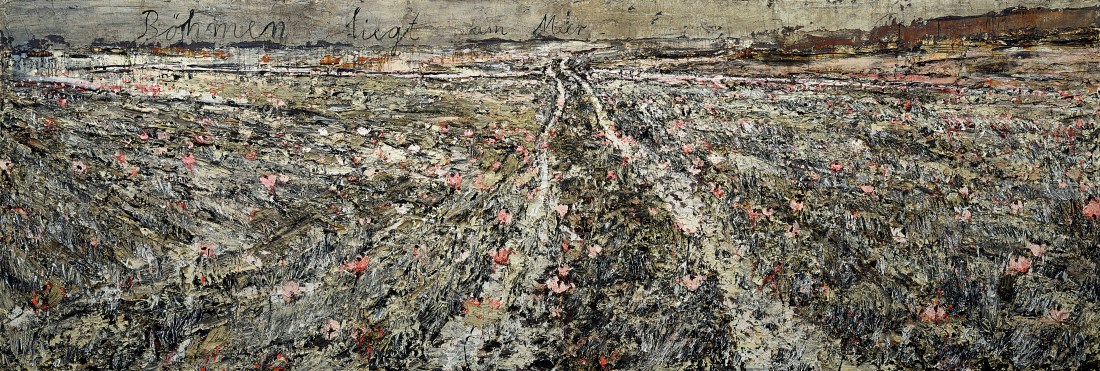 At the American Comparative Literature Association meeting that just ended (Harvard University, March 17-20, 2016) we had a series of three panels, very kindly organized by Maddalena Cerrato, Sergio Villalobos and Gerardo Muñoz, and with the additional participation of Ana Carrasco-Conde, Michela Russo, Marco Dorfsman, Pablo Domínguez Galbraith, and Derek Beaudry, which were designed as an engagement with a book I published in Santiago de Chile (Palinodia) in 2006 (“Beyond the Subject and Heritage: Línea de sombra Ten Years After”). I am very grateful to the organizers, the presenters, and the audience for the personal honor the seminar represents. Many interesting and provocative things were said about the book, but, for I hope obvious reasons, I will not comment on them with any specificity. What I want to do here is briefly to register several of the issues that came up rather forcefully in the conversations of the last three days and that seem to me of particular relevance to the infrapolitical project at its present state of self-understanding. Those issues are: the provenance of infrapolitics from subaltern studies; the politics of infrapolitics; marrano infrapolitics; and the connection between infrapolitics and university discourse. Of course I make my own comments, and do not claim to speak in any name but my own.
We discussed, in those panels, many other things beyond those four, and several other members of the collective also presented papers in different seminars, and I was able to attend some but not all of them, so I may be missing any number of crucial developments. In any case, this note does not claim any kind of exhaustivity, indeed it will only mention those specific issues, and it certainly may be supplemented by others in the comments below, or through the posting of other notes that may want to account for other discussions and for other themes. The occasion was important enough, as it brought up new reflections, new thematics, and a certain number of advancements in conceptualization. So let me try to offer a kind of short-hand summary of those four for future reference.
(This seems to me important in general, leaving aside my possible deficiencies in terms of getting things right, or in terms of focusing on the most significant, because infrapolitics is still at a very early stage of development and because, even at this early stage, it is already meeting with some obscure antagonism from certain quarters of the professional fields involved, which of course affects us and exposes us to the self-weakening of our own ideas. But, really, we have no fear—we stay calm and carry on. In the meantime, keeping a register of discussions is useful to us, and we are doing it, even if it only comes up occasionally on this blog, even if we end up misregistering things, misplacing them, mistaking them—further archive troubles for people whose relationship to the archive is problematic to start with.)
Inevitably, the discussions on Línea de sombra that followed the paper presentations quickly moved to the present state of the project on infrapolitics. The book is, by the way, very happy, it just told me, to be considered merely a part of the genealogy of the present project. It was published at a time when my own engagement with university discourse on Latin America was waning, or undergoing a kind of crisis, or a period of disorientation. No doubt the different essays that compose the book were themselves an attempt to continue to deal theoretically with the aftermath of the collapse of Latin American Subaltern Studies. The term infrapolitics is used in the book partially to mark a sense of the facticity of subaltern life—it was clear, it still is, that subaltern lives are subaltern precisely out of some exclusion from the political. And yet even the more theoretically minded Indian scholars in the South Asian Subaltern Studies project probably never broke away from straightforwardly political reflection, as if the problem of subalternity were only available to political analysis, as if it did not exist outside of politics. But that is not the case, eminently not the case, and it was obvious to some of us as early as the late 1990’s that a different kind of reflection was necessary that would deal not only with subaltern lives, but with all infrapolitical lives, that is, with all lives to the extent politics does not and constitutively cannot exhaust them. From that perspective, so-called political thought in our field, and not only in our field, had become a straitjacket that repressed both thought and politics, that reduced both to reciprocal imitation, and that was intent on disavowing the increasingly potent and undeniable realization that the political categories inherited from modernity were becoming woefully inadequate to account for what they meant to account, and even more inadequate in terms of accounting for what was never in their radar in the first place. The situation is even more blatant today, when political thought has taken on increasingly managerial airs, when it has come mostly to bore not just the people it is allegedly meant for, but even their very authors, as everybody knows (it is enough to read them, one is sorry to say). We need a new kind of political imagination, and infrapolitics is a modest attempt to initiate it—at least it has the virtue of looking at the contemporary exhaustion of political thought squarely in the eye, and of telling it also plainly that it is, more than ever, simply incapable of accounting not just for the totality of existence, but particularly for many things that matter the most for any given singular existence, and particularly for subaltern or subalternized existence.
This is also to say that the colleagues who, without even bothering to listen to us, pretend to be full of reason when they accuse the infrapolitical project of not being political enough are sorely mistaken and altogether miss the mark. Infrapolitics indeed proposes, in every case, nothing but concrete analyses of concrete situations. It just does so from alternative questions, it thematizes a different register, it is in no hurry to reach the properly political site, which in any case is seen by us from the perspective of a demotic republicanism that we have sometimes called marrano democracy or posthegemonic democracy. Indeed, if we take into account the ongoing Taylor-Fordization of the professional classes and the ongoing and relentless production of the reserve army of the unemployed and the underemployed, which makes all of us subaltern or potentially subaltern in ways that would have been unimaginable only a generation or two ago, we could say that the cluster of issues associated with infrapolitics and posthegemony, with marrano democracy, with lives that are not yet political or can never have access to political life as such, it would not be beyond reason to call infrapolitical reflection a site of the class struggle in theory. Certainly much more so than many other ostensibly political options of thought or critical reflection, which increasingly, in the managerial university, unthinkingly become themselves little more than managerial criticism, perfectly attuned to the system they claim to abhor. (Could it be that even deconstruction has become managerial today? But infrapolitics is not simply a fold internal to deconstruction.)
The right to use the term “marrano” or “marranismo” to refer to our project—in the specific sense of, for instance, “marrano infrapolitics,” namely, a propositive practice that internalizes the marrano condition and makes it a point of departure for existential exercise—could be questioned, it was hypothetically suggested, from an identitarian perspective: we would not be marranos, since the marranos expired with the Inquisitorial society that produced them in the first place, which then means: we would be illegitimately misappropriating a term that does not belong to us, that cannot form our identity. But we do not use marranismo in any identitarian sense: indeed, there was never a marrano identity claimed as such, since the marranos were historically only those accused of being so, the accusation performatively turning them into subjects (or rather, objects) of a double exclusion where everything was at stake. Marranismo is for us a historically trans-figuring term that appeals to the very loss of the identitarian archive, to the loss of ground, to the loss of legacies of belonging through the monumental expropriation that constitutes the kernel of contemporary infrapolitical life, where all and any politics ultimately play themselves out. Far from constituting the inception of a new, sorry-assed philosophy of history, our use of the term marrano, or marranismo, points to the very ruin of all philosophies of history, to the abandonment of the archives that make them possible, to the exodus from any kind of originary or eschatological (i. e., teleological) belonging. There is only marranismo at the infrapolitical level, we are all marranos, and when we are that no longer we are already into deluding politics. For better or for worse. This is one of the reasons why marrano infrapolitics refuses metaphorizations in principle, is suspicious of them, and would rather engage in a non-administrative relation with the time of singular life. There is of course nothing non-political about it, even if we call it infrapolitics.
It was showed in one of the talks that, in the same way disciplinary society gave way to the society of control, in Foucault and Deleuze’s theorization, the society of control is giving way to surveillance or expository society. If that were indeed the case, the university would not be safe from it. An expository or surveillance university is a university that targets us and puts a price on our heads. We all become subject to machinic operational images that regulate our thought and set limits to our imagination. For instance, to refer to something that concerns all of us, we are not even talking about the fact that, contrary to the golden rule of some years ago, hirings at the university are no longer done primarily or centrally on the basis of quality of work, but are increasingly organized on the basis of perceived affinities whose generalized function in expository and exclusionary surveillance is obvious. This, which would have been called straight corruption just some decades ago, is today a widely extended practice, and it includes the best universities as well, or indeed them in the first place. That this spells the end of the university in the classical sense goes without saying. In the meantime those of us who have reasons to suspect our maladjustment to the new conditions must hide in plain sight, the same talk claimed. Infrapolitical reflection is perhaps such an attempt, risky as such, exposed as such, even as it attempts counterexposure, or even nonexposure. But there is no ivory tower. The university is no more than a symptomal torsion of the wider society. Which is why infrapolitics must abandon its original roots in university discourse, exit disciplinary configurations, and break away from any attempt to surrender at the capture of thought through increasingly domesticated, indexed, regulated, venued, and analytically-ranked self-insertion. This is one of the reasons why infrapolitics claims a savage terrain of engagement, beyond fields: because it understands that battles internal to university politics are always already rigged, always already lost battles. Hence infrapolitics prefers to hide in the plain sight of the world at large, and reflect away from any regulated archive: the real struggle is out there, particularly if we manage to escape from the boredom that threatens us from the rear, and from the sides. Boredom is, after all, the fundamental academic passion, is it not? Hence also our most powerful enemy.
Nearness Against Community: The Eye Too Many. By Alberto Moreiras.
(Lecture presented at the Abstraction Conference, Department of Comparative Literature, University of California-Irvine, March 11-12, 2016)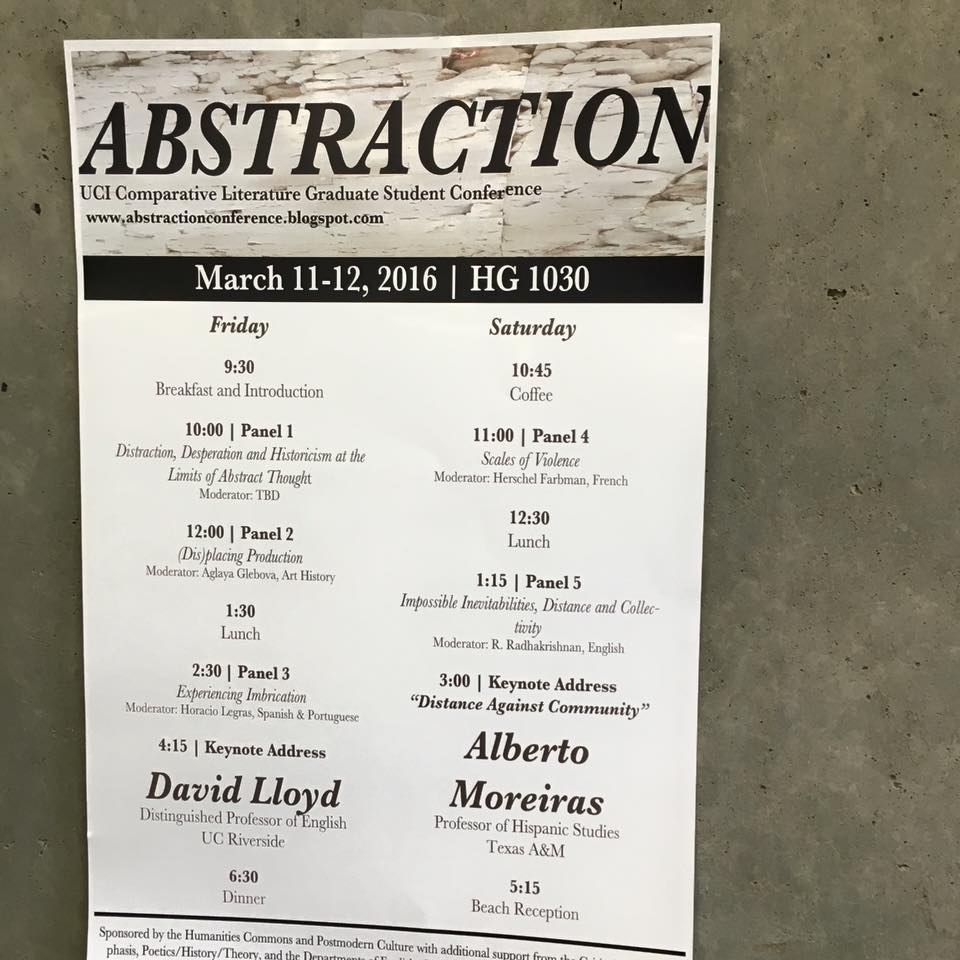
My intention is to present to you a precise definition of what I call marrano infrapolitics, a definition that I can sum up in the phrase “becoming homely in the unhomely,” in the context of the epochal ruin of politics, the end of community, the vanquishing of the principle of general equivalence, and the abandonment of nihilism. All of it goes through an acknowledgment of the tragic condition of the human, but also through an immense task of architectonic destruction. I hope you bear with me. As I was listening to so many great papers yesterday I could not help but think what I have thought also at other times: that something like a new frame for thought was becoming increasingly necessary. I do not know if you would find that fact all that surprising at this point. For better or for worse, I hope not in any kind of arrogant or presumptuous way, marrano infrapolitics does wish to provide it, and wishes to do it through the establishment of a difference between the polis and the political that may orient an existential position today. Call it the infrapolitical difference, and let us see what you think. Yes, it is an attempt to bring everything back from abstraction into the most concrete thing you have: your life. What I will read is about half of a text that I finished only last week. I hope the drastic cuts still make things understandable enough. I can send the complete paper to those of you who might become interested.
Some of you at least will have seen the first season of the Better Call Saul television series, or the serial documentary Making a Murderer. I think a claim can be made that both texts enact a certain marranismo, infrapolitical in nature, although they do it of course in very different ways. At the end of the season, Jimmy, the protagonist of Better Call Saul, decides that “doing what is right” is no longer going to hold him. He seems to make that decision on the basis of the betrayal by his brother, Chuck, a character defined by Jimmy’s friend as “a stuck-up douchebag.” Chuck does not consider his brother a good enough person to become a lawyer in the firm he is a partner in. So Jimmy, dejected, perhaps having lost his last mooring, gives up on his sustained attempt to become an upstanding citizen within the law. In the talk to the bingo crowd, in the last episode, when Jimmy makes his decision to go rogue, he emphasizes his brother’s betrayal. He had stopped being “slippin’ Jimmy” and spent ten years as a mailroom clerk in his brother’s firm and getting an online law degree from the University of American Samoa. He passed the bar exam for the State of New Mexico at his third attempt. His brother ought to be proud, since Jimmy did that for himself, certainly, but also to (re)gain his brother’s trust. To no avail, since Chuck still considers Jimmy a villain, slippin’ Jimmy indeed, and refuses to let the firm hire him. On that basis Jimmy makes his decision. His heroic subjectivity goes out the window in the very decision to break away from the law.
Now, there is a problem in Jimmy’s story. I can understand how a betrayal by “the system” may drive somebody into piracy, not even out of a need for revenge, only out of a need for freedom: you cannot make it within the system because the system is rigged and corrupt, so you abandon the pretense, and from then on it is only a matter of getting away with whatever you do for your own advantage. But can a betrayal by a member of your family trigger the same effect? Is it not the case then that you in fact continue to subordinate your life to the little family drama that perhaps caused you to become slippin’ Jimmy in the first place? This is an Oedipal drama that will keep you in the bounds of unfreedom: you want to succeed outside the law only to confirm your brother’s ideas about you and show him what can be done with them. We need to keep in mind that collapsing the family into the system and the system into the family, although a tradition in rightwing thought, has a price: a symbolic break with the law that happens through a thorough absorption of the Oedipal triangle is perhaps merely an inversion of the relation to the law. Jimmy’s decision may not be infrapolitical enough. It will not lead him home.
I myself have only seen three episodes of the terrorizing, deeply uncanny documentary Making a Murderer, partly because it scares me, partly because I live out in the country and my internet connection is through satellite, and I do not have enough gigabytes to watch everything I want in a given month. But the documentary tells the story of Steve Avery, a poor devil from Wisconsin that was falsely accused and convicted of a crime he had not committed, and condemned to thirty-four years in jail. The first episode—things get much more complicated later—explains that he was released from jail after eighteen years, when new DNA-analysis techniques exonerated him and showed his innocence. His lawyers’ appeals had by then been exhausted, the Wisconsin Supreme Court had confirmed the ruling against him, and Avery could have gotten out of jail on parole much earlier if only he had declared his guilt: he had nothing to lose, or almost nothing. He only had to say “yes, I did the deed,” and he could have been out resuming his life. But he did not want to do it, preferred not to. Why? He thought he would not say “yes, I did it,” because he had not done it. He faced the most terrifying—a life in jail—because his truth was his only possession, his only possibility of not losing himself forever.
Both Jimmy and Avery are uncanny creatures, in the sense that they opt for the uncanny, they assume a radical unhomeliness, they embrace the unfamiliar out of a sense of home. And, in a sense, they opt out of politics altogether. Jimmy himself makes everything depend on his brother’s approval, but perhaps it is Mike, another character in the series, who metonymically emphasizes whatever is homely in the most unhomely decision: While a detective in Chicago, Mike had to kill the cops who had killed his son. He flees to New Mexico to be near his daughter-in-law and his granddaughter. There he works as a parking attendant, reads the newspapers, does the crossword puzzles, and waits for a phone call from the remains of his family. Yes, in the meantime he does odd jobs and passes no judgment, he does what he is paid to do, but what matters to him is the return home, what remains of it. And Avery makes his truth the only home he has, his agalma, his treasure.
One thinks of Sophocles’ Antigone. And of marrano fates. Take the historical marranos: they were never a social class, only a group without group of individuals accused of being marranos, that is, accused of judaizing in a society where such an accusation meant imprisonment, ruin, torture, even death. To be a marrano then was a factical condition one could not survive. Direct repression by the state (or by “the power in the State superior to the State itself,” the Inquisition) made it not just a social but also a political condition. What we can call marranismo today is of course a tropology, a metaphoric extrapolation, and refers to an infrapolitical condition. It is a not directly political condition of existential displacement from hegemonic social conditions at the very point of their hegemonic articulation (a criminal is also displaced as such, but the condition of the criminal is not strictly comparable to the marrano condition: they are mutually heterogeneous). Marranismo, as an infrapolitical condition in the present, is intellectual dissidence and existential internalization of such a dissidence. At the limit, it can be referred to Antigone, whose act, misunderstood by Creon as political, is a marrano act in the sense that it expresses a radical difference from political conditions. Antigone was not looking for inscription, rather for de-inscription. She is the person, as her first conversation in the play with her sister Ismene reveals, who does and is going to do what she has got to do, regardless of the consequences. Why? Because it is due; but due to whom or to what? That remains concealed. What is due, perhaps, is due to a destiny, or to a character, to the way things are. Creon cannot tolerate it. Antigone’s persistence turns her into what the play calls dein[a], terrible, uncanny, unhomely, unheimlich. But she becomes unheimlich out of a need not to be left thoroughly homeless, radically destitute. We can see here, in the background, in the difference between the two senses of home that Antigone or any marrano factically appeal to, what Martin Heidegger in Introduction to Metaphysics was still calling the “ontological difference,” of which he said: “The originary division, whose intensity and originary disjunction sustains history, is the distinction between Being and beings” (218-19). (By the way this is a good moment to say that David Lloyd proposed to us yesterday, with great elegance and flair, what he called a “red republicanism” through a number of supplementations to Hegelianism; and that what I am trying to do is to propose the conditions for what I call a marrano republicanism, very much dependent on the possibility of retrieval of the ontological difference as an essential matter for thought.)
If Being is home, what is at stake for Antigone or marranismo is the deep existential contestation of nihilism in the Nietzschean sense. For Nietzsche nihilism was “the most unheimlich of all guests,” and marranismo apotropaically incorporates the most unheimlich position for the sake of a counterturning: the marrano, not the one accused of being such, but the one who has internalized and assumed his condition in the rejection of a fallen home, of the social home, of the political home, in the rejection of compromise, the law, or hegemony, invokes a secret truth, another home that opens the ontological difference within singular history. In his commentary to Hölderlin’s “Homecoming/To Kindred Ones,” Heidegger says that “homecoming is the return to the nearness to the origin. Only he can return home who previously, and perhaps for a long time, has wandered as a traveler and borne upon himself the burden of the journey . . . the essence of nearness appears to be that it brings near that which is near, yet keeping it at a distance. This nearness to the origin is a mystery” (Elucidations 42). The mystery remains such, neither Antigone nor the marrano claims to unveil it. Which is why ontic namings will not do the trick. It is not a matter of religion, it is not a matter of ethics, certainly not of politics, and it is not a matter of following any alternative principle. Heidegger also says: “What is most characteristic of the homeland, what is best in it, consists solely in its being this nearness to the origin—and nothing else besides this” (42). We do not have to appeal to any fatherland or ideology. We can discount all the rhetoric: what Heidegger is saying is that in the only sense that matters home or the hearth are the relation to Being understood as the essence of Dasein: the human is human in and through an originary relation to something that escapes ontic nominations but which, for the human, can only happen historically. There is an originary relation that marranismo claims, which is the absolute limit of the place where politics can be narrativized. I call it infrapolitics, and risk the thought that it has everything to do with the difference between the polis and the political.
Let me offer you a thesis, as clearly as I can do it at this point, so that you may agree or disagree with it. The marrano must, and existentially has no choice but, to invoke a nearness to something without which life would be unlivable. That something is not politics, it is precisely not politics. That is also Antigone’s need, which is not to say that Antigone is a marrana: rather that marranismo is necessarily antigonic in that sense. I think the thought of the ontological difference—the difference between beings, in the usual sense, and Being, which establishes the horizon of appearance and presencing—opens itself essentially as the appeal to that something. That is of course the role of the ontological difference in infrapolitics. And this seems consistent to me with the Heideggerian interpretation of Antigone, in its second manifestation, in the 1942 text we will talk about, as “becoming homely in the unhomely.” “To assume a distance” is an empty gesture, and doubly terrible if that assumption is not already looking for something other than the distance itself. We assume a distance for the sake of a nearness. And the nearness matters the most.
If it is true that the history of thought in the West is a history of the progressive voiding out of Being until, with Hegel, which brings to an end the inception of philosophy started by the Greeks, Being is substance and substance is the subject, and Being becomes the most abstract and general of words, substantial exhaustion turns into a final point of abstraction, and abstraction, having reached a point of no exit, an end, having become aporos, turns into distraction. We live in distracted times, in aporetic times. Reiner Schürmann begins his monumental text, Broken Hegemonies, in reference to Oedipus’ nocturnal knowledge. “The tragic condition” is the specific infrapolitical condition of our aporetic time: “To think is to linger on the conditions in which one is living, to linger on the site where we live. Thus to think is a privilege of that epoch which is ours, provided that the essential fragility of the sovereign referents becomes evident to it” (Schürmann 4, 3). The “singularizing withdrawal” that opened the tragic in pre-metaphysical times through its conflict with “the universalizing impulse” of “political” or historical principles is again with us. Both instances cannot be reconciled through any appeal to higher principles. This “kenosis” of the principle opens a new time of tragic an-archy (4). Founding speech gives way to “insurmountable silence” (17). Ours is a “pathetic site” that once again reveals, against all abstraction, “the tragic condition” of being (532). Infrapolitical marranismo understands and assumes such a condition, dwells in it, as Jimmy or Avery sufficiently show.
In the astonishing pages of Hölderlin’s Hymn ‘The Ister” (1942) where Heidegger reframes, in what I will considerately call an anti- or non-Nazi sense, the interpretation of the first choral ode of Antigone he had offered in Introduction to Metaphysics (1935), he speaks about the polis as the site of a turning-counterturning that organizes the historical existence of the human being: “Perhaps the polis is that realm and locale around which everything question-worthy and uncanny turns in an exceptional sense. The polis is polos, that is, the pole, the swirl [Wirbel] in which and around which everything turns.” (Hölderlin 81). For Heidegger the polis, as “the site of being homely in the midst of beings as a whole” (82), is also the site of a counterturning: “what properly characterizes the unhomely is a counterturning that belongs intrinsically to its essence” (84). The polis: the homely-unhomely site, the originary site, the founding site of any and all historical appropriation, and by the same token of any and all historical disappropriation. But this means that “the polis is and remains what is properly worthy of question in the strict sense of the word, that is, not simply something questionable for any question whatsoever, but that with which meditation proper, the highest and most extensive, is concerned” (85).
It is here that Heidegger pronounces some fateful words we have not yet thought through. There is no politics without the polis, and yet the essence of the polis is not political. There is a difference, uncanny in nature, between the polis and the political, and yet that difference is also a logical one. This is the logic: “if ‘the political’ is that which belongs to the polis, and therefore is essentially dependent upon the polis, then the essence of the polis can never be determined in terms of the political, just as the ground can never be explained or derived from the consequence” (85). What determines the essence of the polis? Politics cannot explain the polis, even if the polis determines the political. The political may have always already started, but the polis finds its beginning, its origin, in a realm that cannot be reduced to the political. This region, this site prior to any site, this chora, is the originary site of the nearness, hence also the possibility itself of any distance whatsoever.
I understand Spanish philosopher Felipe Martínez Marzoa’s own meditation on the polis in this context—and let me suggest that Marzoa’s work is perhaps entirely contained in such an effort. He says, for instance: “We call polis [the site] where the game that is already being played aspires to become relevant as such, that is not a doctrine on the polis but precisely the polis itself; we could refer to the fact that such a relevance means at the same time the loss [of the polis] by pointing out that the polis dies not through the attack of the barbarians, rather precisely because it stands” (Marzoa, Heidegger 28, my translation). The loss of community, through politics, is a direct result of the self-recognition of the community. As a “community” the polis binds the homely, but as a “community” that explicitates its own game it opens itself to the unhomely. This is the first historical inception, a thematization of the game of common life as a game of binding loss that opens, as such, the space of the political. But we can also bring the history of the polis to our own times. “Distance” is for Marzoa “the distance or reserve that irretrievably remains at the root of the modern project itself, the irretrievable secondariness of the modern, irremediable in the sense that recognizing it is in no way going back to the primary, rather only attempting to understand what is secondary as secondary” (111). The political is a thematization of secondariness in respect of the very question-worthiness of the polis itself. But the political is also a secondary, always belated reflection on the loss of the turning-counterturning relation to being that first makes the polis historical as such. For Marzoa only distance can bring up, minimally, the very difference between the primary and the secondary that organizes the very possibility of a step-back from contemporary politics. Such a distance is infrapolitical distance.
If marrano history, as the history of the marranos, can testify to a situation of double exclusion—the marranos are simultaneously excluded from their originary provenance, Jewish, and from their secondary provenance, Catholic—, a metonymic projection makes of the marrano a figure of displacement and homelessness. A marrano inscription is countercommunitarian and singular, cats on a roof, but also besieged and precarious, cats chased by dogs. A marrano position is never immune to politics, but it relates to politics para- or posthegemonically: hegemony kills it. It prefers not to be killed. It dwells infrapolitically, as a survivor, in its secret, which it inhabits as one inhabits an ethos, knowing there will be no protection except chance. Chance is its tragic condition. If, as Michel Foucault says, “one is ‘in the true’ only if one obeys the rules of some discursive police” [Foucault, Archeology 224], then the marrano’s untruth stands aside, in a disobedience that makes it a perpetual target. From it, it dreams of a relationship to history that will not be Hegelian or Nietzschean. Can that relationship be established? Or is marrano infrapolitics structurally an opting out of history, an abandonment of history’s script for the sake of an untimeliness beyond measure? Let us once again remember Antigone, or Jimmy, or Steve Avery.
In Introduction to Metaphysics, a 1935 text, pertaining therefore still to the years of commitment to some kind of hypernazism, Heidegger attempts to establish what he calls the essence of the human in its first inception or beginning in the history of the West in reference to Oedipus, in powerful words that I find hard to deal with. Those words are:
Oedipus goes to unveil what is concealed. In doing so, he must, step by step, place himself into an unconcealment that in the end he can endure only by gouging out his own eyes—that is, by placing himself outside all light, letting the veil of night fall around him—and then by crying out, as a blind man, for all doors to be flung open so that such a man may become revealed to the people as the man who he is.
But we should not see Oedipus only as the human being who meets his downfall; in Oedipus we must grasp that form of Greek Dasein in which this Dasein’s fundamental passion ventures into what is wildest and most far-flung: the passion for the unveiling of Being—that is, the struggle over Being itself. Hölderlin, in the poem “In lieblicher Bläue blühet . . . ,” speaks this seer’s word: “King Oedipus has perhaps one eye too many.” This eye too many is the fundamental condition for all great questioning and knowing as well as their sole metaphysical ground. (112-13)
I wonder if the eye too many Oedipus grows and was made to grow is also our own eye today. The eye too many that Oedipus has enables him to distinguish seeming from being, but does not spare him from errancy. Errancy, defined as “the space . . . that opens itself up in the interlocking of Being, unconcealment, and seeming” (115), is a state of being that includes the fight against errancy. This fight against errancy seems to define whatever remains in the Heidegger of 1935 of the notion of authenticity exposed in Being and Time (1927). It is a tragic fight that will eventually lead Heidegger into a meditation on the possible end of errancy, into a meditation on Bodenständigkeit, “earthiness” or “rootedness,” into a meditation on a form of dwelling not or no longer dependent on gouging out one’s own eyes or other people’s eyes, into a form of historical life no longer sacrificial. This is poetic dwelling, developed through his readings of Hölderlin through a process and a number of years that take Heidegger from a clear commitment to violence and to political violence into something else—this something else is or would become eventually Heidegger’s abandonment of Nazism, and with it of the region of politics, of the very idea of politics, as the site of historical salvation.
For Heidegger, referring to Hölderlin, poetic thought, as opposed to technical, violent thought, refers to something that abides and endures. The something that abides and endures is home or the hearth, only retrievable in shy remembrance: “This shyness . . . is more decisive than all violence” (153).
A slow path towards a nearness to the origin, a homecoming that is more decisive than all violence: this is the eye too many through which Oedipus, and all dwellers in the tragic condition, must attune to the experience of a homeliness “more decisive than all violence.” I think it is fair to say the beginnings of such a meditation can be found, still in a preliminary form, in the analysis of the first choral ode in Sophocles’ Antigone that Heidegger works out in the 1935 text. But he would come back to it and establish a fundamental correction a few years later. Even later, towards the end of his life, other corrections would ensue.
The first choral ode of Antigone says “polla ta deina kouden anthropou deinóteron pélei,” “manifold is the uncanny, yet nothing uncannier than man rises beyond him” (quoted in translation in Heidegger, Introduction 156, translation modified). If nothing is uncannier than the human being, then the human being is the uncanniest. For Heidegger, “the saying ‘the human being is the uncanniest’ provides the authentic Greek definition of humanity.” (161). Oedipus, we recognize, was also uncanniest, as the struggle against seeming undid him, and by undoing him turned him into the man he was. This is the tragic condition of the human in the Greek way.
There are three passages in the ode that merit special attention from Heidegger: verses 360, pantoporos aporos ep’ouden erchetai, 370, hupsipolis apolis; and 372-73, met’ emoi parestios genoito met’ ison phronon. Pantoporos aporos is translated by Heidegger as “everywhere trying out, underway; untried, with no way out he comes to nothing.” Hupsipolis apolis is translated by Heidegger as “rising high over the site, losing the site is he for whom what is not is always for the sake of daring.” And verses 372-73 are rendered as “let him not become a companion at my hearth, nor let my knowing share the delusions of the one who works such deeds” (158). Pantoporos aporos and hupsipolis apolis are presented by Heidegger as interpretations of the uncanniest in the human (deinótaton) (162). As such, they are characterizations of the human in the context of the explicitation of the originarity unity and disjunction of being and thinking. If thinking means apprehending (noein as Vernehmen), apprehension is, Heidegger says, “a happening (Geschehen) in which humanity itself happens” (150). How does it happen? Thinking is a relation to being that is channeled, at the time of the inception, as reciprocal violent appropriation. If the human can dispose of the sea and the earth, of animals, of language and passion, it is because it is disposed to them and by them, through the violent prevailing of Being. And so humans ultimately look at their own perdition in various ways: they are aporos and apolis because “they stand in the no-exit of death” (169) as essential, constant limitation—a limitation that rules over the fact that human techné clashes against diké. This confrontation, techné–diké, which he finds clearly expressed in Antigone’s first choral ode, is also at the same time what, at the end of his book, Heidegger would claim constitutes the “inner truth and greatness of National Socialism,” the historical confrontation at the end of metaphysics that could restitute the possibility of a resolutive “encounter between global technology and modern humanity” (Introduction 213). This is 1935 (although the phrase about the encounter was added later, in 1953).
Perdition (Verderb) is the possibility that ensues from the oppositional relation of the two forms of the deinon, techné and diké. Perdition is the uncanniest. It does not come at the end of any failing activity, it “holds sway and lies in wait fundamentally” (173). Oedipus faces disaster because disaster faces Oedipus. If Heidegger also pays attention to the conclusion of the choral ode, which exclude the uncanny human from hearth and counsel, it is to say that “one who is in this way [namely, as the uncanniest] should be excluded from hearth and counsel . . . Insofar as the chorus turns against the uncanniest, it says that this manner of Being is not the everyday one . . . In their defensive attitude they are the direct and complete confirmation of the uncanniness of the human essence” (175-76). The determination of Greek humanity assumes its tragic condition in uncanny errancy and the necessary loss of the hearth and of the sharing of collective counsel, of communal thought. For Heidegger this is the first inception of the West as history, or of history in the West.
The uncanny, which translates into English the Greek deinon, is in German the Unheimliche, the unhomely. Heidegger says that the reciprocal relation of diké and techné is the same thing as the reciprocal relation of being (einai) and thinking (noein) (176). The relation is a violent relation. It makes uncanniness happen, that is, it makes homelessness appear. “The assault of techné against diké is the happening through which human beings become homeless” (178). Homelessness results, originarily, in the first historical inception, from the mutually appropriating relation of being and thinking. That the chorus will exclude the human from hearth and counsel confirms the unhomely but, at the same time, makes the home first disclose itself as such (178).
The question for a marrano infrapolitics has to do with whether the second inception, the other beginning, presumably to occur in the present, would stand in a similar relation to the unhomely. Heidegger frames his entire discussion of the choral ode in the context of an overwhelming confrontation between diké and techné whose outcome is violent and necessary perdition. Is homelessness a condition of marrano infrapolitics that discloses as if for the first time the need for a home? Or would marrano infrapolitics assume the uncanny, even the uncanniest, as its necessary constancy and prevailing? Are marrano infrapolitics a resignation to necessary, tragic violence? Are marrano infrapolitics an infrapolitics of perdition? We could, again, ask Jimmy, or Steve Avery. In terms of Heidegger, some scholars have noted an allegedly unrecognized difference in his treatment of the first choral ode of Antigone in Introduction to Metaphysics and in the 1942 lecture series entitled Hölderlin’s Hymn “The Ister”. That difference is for me an essential difference, and it sets Heidegger on the way to an infrapolitical project, out of and away from politics at the end of metaphysics.
An other beginning is presented as an overcoming of nihilism. This was so in the 1935 text and it will be so in the 1942 text on Hölderlin, which includes a central chapter in which Heidegger returns to the choral ode of Antigone. Some years mediate, a thorough engagement with Hölderlin has also occupied Heidegger in those years. The interpretation of the choral ode is the same, yet fundamentally different. Where is the difference? The difference is in the frame. Heidegger no longer emphasizes the historical confrontation between techné and diké. What interests him now is the relationship between the homely and the unhomely understood not in terms of the heroic and the violent, rather in terms of the hearth, and phronein. Once again, Heidegger focuses his commentary of the choral ode in an elucidation of the same verses Introduction to Metaphysics concerned itself with. But the interpretation now takes its departure from what is attributed to Hölderlin: “For Hölderlin, that essence [of history] is concealed in human beings’ becoming homely, a becoming homely that is a passage through and encounter with the foreign” (Hölderlin 54). Accordingly, for Sophocles too “human beings are, in a singular sense, not homely, and . . . their care is to become homely” (71). This is the difference: it is now caring to become homely rather than accepting the destinal character of uncanny violence that describes the essence of the human.
But the decisive moment in Heidegger’s reframing of his reading of Antigone must be found in the discussion of the first dialogue between Antigone and Ismene, which was absent in Introduction to Metaphysics. Heidegger focuses on Antigone’s words to her sister, announcing to her that she is willing pathein to deinón touto, in Heidegger’s translation “to take up into my own essence the uncanny that here and now appears” (103). To suffer the terrible, to bear the unhomely: Antigone takes it up, she does not flee from it: “within the most uncanny, Antigone is the supreme uncanny” (104). And then Heidegger asks: “What if that which were most intrinsically unhomely, thus most remote from all that is homely, were that which in itself simultaneously preserved the most intimate belonging to the homely?” (104).
Everything depends on the interpretation, within the context of the tragedy, of the last few verses of the choral ode, where the chorus affirms its rejection of the uncanny ones: “met’ emoin parestios genoito met’ ison phronon hos tad’ erdoi,” which Heidegger renders as “such shall not be entrusted to my hearth, nor share their delusion with my knowing, who put such things to work” (92). Are we to think that the chorus rejects Antigone, the rebellious, who will not conform to the laws of the city? If so, the choral ode would have become, in these last verses, “a song in praise of mediocrity, and a song of hatred towards the exception” (97). The tragedy does not support that. Heidegger returns to the thought that a difference is being sustained through those very words between the polis and the political, of which he adds “for the Greeks, the polis is that which is altogether worthy of question. For modern consciousness, the ‘political’ is that which is necessarily and unconditionally without question” (94-95). The interpretation according to which the chorus rejects Antigone, expels her from the hearth, can only be the interpretation of modern consciousness. But there is an alternative reading even for us.
Antigone’s willingness to bear the burden of the heart, to suffer any suffering in her commitment to honor the dead, must be understood otherwise. There is a stupid unhomeliness, which consists in “a forgetting and blindness” (109) of the hearth, but it is not Antigone’s—it is, rather, Creon’s. Antigone’s unhomeliness is of an entirely different kind, since it consists in a radical affirmation of the hearth: “The hearth, the homestead of the homely, is being itself, in whose light and radiance, glow and warmth, all beings have in each case already gathered. Parestios is the one who, tarrying in the sphere of the hearth, belongs to those who are entrusted with the hearth, so that everyone who belongs to the hearth is someone entrusted, whether they are ‘living’ or dead” (114-15). Antigone is able, that is her supreme action, to assume the passage through unhomeliness and death for the sake of taking up unhomeliness into her own essence. Antigone, says Heidegger, “becomes homely within being” (117). She is exempt from the rejection of the chorus because she herself founds the very sense of hearth the chorus enacts. “Becoming homely in being unhomely” (121) is Antigone herself, her essence. Heidegger calls this the “poetic:” “The unhomely being homely of human beings upon the earth is ‘poetic’” (120). Deprived of the simple recourse to homeliness among beings, Antigone’s decision appeals to the higher homeliness of being, which founds the polis as it founds any and every other possibility of historical dwelling for the human.
I prefer to call Heidegger’s “poetic” infrapolitical. The wrenching shift from an everyday engagement with things to a radical engagement with the darkness of the originary home, never to be reached, but approachable through nearness, could perhaps be described poetically, but becoming homely through the unhomely remains an infrapolitical task. The infrapolitical task is not a minor one: it has to do with establishing an existential attunement to the fact that everywhere today politics is nothing more than venturing forth with no way out, a siteless undertaking. Politics is today the uncanniest were it not the most ridiculous. Politics is Creon’s doing, the headless and errant assertion of unhomely power lost in non-being, lost in the nothingness of administrative claims. Is that the injustice of the world imagined by Zur Linde in Borges’s story? Or should we keep awaiting a new historical dawn, Hegelian or otherwise?
I also want to translate the notion that the polis is the most question-worthy, in its very difference from the political, into the notion that it is infrapolitics that is question-worthy when there are no longer any extant questions for politics: politics is technology today, in a context where diké is no longer overwhelming, because it has been thoroughly absorbed into political techné in the form of social administration under the principle of general equivalence. There is no longer a polis—it only remains as a ghost from the tradition. Its spectrality subsists in the form of infrapolitics as a dark memory of the origin; as a reminder of the fact that we too were historically appropriated once. But no more. We have all been unmoored as potential marranos, which is not without its promise.
Reflecting on the polis, Martínez Marzoa notes: “either the community itself does not make itself relevant in any way, remains opaque as such, and then to a certain extent it can be said that there is no community, it does not take place, since it never becomes manifest . . . or else the community is not in a position to rest content with its own opacity, and the links, that is, the countersettings, always already taken for granted, are forced into becoming said, becoming relevant, and then the community certainly takes place, it certainly exists, but then it is to be seen whether what happens is not that the community explodes” (“Estado y polis” 106). Once the distance of the game becomes not just relevant, but obvious, once the distance has been naturalized and has assumed a patency, has become primary, then distance is all there is, but empty distance, distance that rules over a space that is no longer the space of community, but an indifferentiated and continuous space, an unlimited space where only arbitrary cuts are not just possible but customary. The consequences reach modernity in the following way: the “political problem” in modernity is that “consensus is limited to one thing only, which is not to seek any consensus; there is to be agreement only in creating and maintaining conditions so that it is possible to live without any agreement at all, not communing with anything” (“Estado y legitimidad” 88). This is the “democratic republic” or just “democracy” (“Estado y polis” 113). But the other side of this coin concerning the dissolution of consensus and communions in modernity is “what happens when those dissolutions and delinkings begin to be (partially) real and the State begins to find itself not even opposed to those things, but alone with itself; it would need to be seen whether there is some reason then for the State to feel panic before itself and to hurry and look for new reconciliations and syntheses with those other things” (89). The thorough emptiness of the political determination, its modern-democratic formulation, anchored in the principle of equivalence according to which every thing is exchangeable for everything else, and there is nothing outside the system of circulation, means there are no substantial, only formal, links, there is no possibility of a political home or a nearness to any kind of origin. But this also means: “that structure or formation that projects as its concept of legitimacy the absence of links, to the point where it cannot function otherwise, at the same time fails to function without constantly making up some or other supposedly given links, in the name of which, sooner or later, the set of conditions that the concept of legitimacy acknowledges is violated . . . Nihilism must above all avoid recognizing itself, it must always fabricate something to hold on to, and this is because precisely the recognition of nihilism would be the only non-nihilist thing” (100). But this is nihilism with a bite. In the state’s reaction to its own empty formalism, oppression ensues.
And yet it was Schürmann himself who said: “Only a wrenching of thinking allows one to pass from the ‘time’ that is concerned with epochal thinking to originary time, which is Ereignis—to agonistic, polemical freeings. So, it is not as an a priori that temporal discordance fissures the referential positings around which epochs have built their hegemonic concordances” (Schürmann, Broken 598). This wrenching of thinking—do we need to refer to it as capable of a new determination of the essence of the human being, a new determination of history, a new historical dispensation? The answer would have to be negative, particularly since those intended “agonistic, polemical freeings” would not coalesce into any new hegemonic concordance. Marrano infrapolitics is the mere possibility of the wrenching of thinking towards the nearest.
The originary logos of the West, the logos of the first inception, evolved through Platonic and later times into today’s cybernetics and logistics following a process of abstraction that has turned Being into the most general, hence empty, of concepts. I have made an effort to give some concreteness to Being by associating it to the home of infrapolitics. In a late lecture entitled “On the Question Concerning the Determination of the Matter for Thinking” old Heidegger maintained that the change from the dominance of the principles of modern subjectivity into the dominance of cybernetics, which stands for the total orderability of the world, consummates the final avatar of the history of presence, and it is no longer possible to go past it. In that impossibility, which is the confirmation of the hypothesis of metaphysical closure, the question of presencing in a verbal form, still a part of the Greek experience of life but covered over and forgotten, comes up once again as a hint for those able to understand today’s impasse. The total orderability of the world, which the present age and its politics will continue to bring on in an ever increasing manner, constitutes the final principle of metaphysics. Total orderability is general equivalence. But general equivalence as total orderability is also the end of politics—not its factical end, since there will be politics, but rather the end of politics as historical mediation. What is essential today is orderability as such, which cannot be fought politically. Orderability can only be fought infrapolitically, by developing a relationship to existence that dwells on and questions the other of orderability, which, as mere trace, is the remnant of the free historical being of the first inception. This is marrano infrapolitics: as another, even later Heideggerian essay puts it, the attempt to dwell in what “sustains and determines and lets us grow in the core of our existence” (Heidegger, “Messkirch” XX) against every imposition of conformity. If we are still truly capable of it.
Alberto Moreiras
Texas A&M University
Top of Form
Bottom of Form
Sobre Populismo, de José Luis Villacañas (Madrid: La Huerta Grande, 2015). Por Alberto Moreiras.
Me alegra seguir el ejemplo de Gerardo Muñoz y escribir unas palabras de reconocimiento al importante libro de José Luis Villacañas sobre populismo. Como Gerardo ya ha hecho (ver más abajo en el blog) un análisis temático del libro, eso me permite a mí aprovecharme de su trabajo y concentrarme sólo en algunos puntos especiales. Debo decir de entrada, para preparar mi propia reflexión, que, a pesar de que la elegancia intelectual y personal de José Luis le lleva en las primeras páginas a resaltar la complejidad práctico-teórica del populismo, y así su dignidad intelectual, como opción política para el presente, su ensayo es, a mi juicio, una demolición sistemática y total del fenómeno, sin concesiones de ninguna clase. Cada uno tiene sus preferencias personales, pero hay que notar que es difícil, tras la lectura, sustraerse a la idea de que el populismo es política para idiotas. Y todavía más difícil encontrar formas de articular un desacuerdo con tan severo dictamen.
Villacañas escribe su libro en un momento especialmente grave de la política española, cruzada, como él mismo expone, por un desgaste de carácter fundamental en tres niveles—crisis económica, crisis institucional y crisis de representación política—que amenaza con convertirse en crisis orgánica (“Un paso en falso, solo uno, y desde luego los éxitos históricos de la España contemporánea pueden verse comprometidos” [122]). No hace falta ser un lince para entender que el libro no se postula sólo como un acto académico ni meramente reflexivo, sino que tiene una intencionalidad política de primer orden, y quizá dominante. Pero el libro lo escribe no un cascarrabias del 78 sino alguien que ha apoyado en los últimos tiempos frecuente, grande y entusiastamente la posible renovación política española representada por Podemos. Muchos se rascarán el cácumen con perplejidad: ¿cómo este hombre se permite tan fieros denuestos contra el populismo si sus simpatías políticas están con el partido de Pablo Iglesias? ¿No es cierto acaso que la mayor parte de los defensores académicos de la línea política de Podemos lo hacen precisamente desde el populismo, desde posiciones pro-populistas, desde posiciones que apoyan sin renuencia alguna a los máximos teóricos del populismo, en el mejor de los casos a los buenos, como Ernesto Laclau y Chantal Mouffe, y a su escuela, y en otros casos también a los mediocres, que son los tantos citados y recitados en los artículos que uno va leyendo sobre la llamada “latinoamericanización” de la Europa del Sur (¡pero no es eso!), las decolonialidades pendientes en España (tampoco), los poderes duales, y las virtudes infinitas del comunitarismo universal, para no hablar de los identitarismos endémicos que son como el cola-cao de la joven izquierda descerebrada (y descerebrada históricamente, no vayan a pensar que este es un insulto caprichoso y trivial, por razones que Villacañas expone y analiza persuasivamente en su libro)?
Pero, cabalmente, esa es la intencionalidad política real de su libro: a favor de una renovación radical de la política española, a favor de una sucesión política efectiva, y sin embargo en guardia contra lo que en esa renovación y sucesión puede convertirse en catastrófico, puesto que no hay garantía de que no vaya a ser así. Hay que leer, por ejemplo, con cuidado el siguiente párrafo: “Las demandas de las mareas sociales en defensa de la educación, de la sanidad, de las mujeres, de los homosexuales, de los ecologistas, de los dependientes, de los desahuciados, de los afectados por la hepatitis, todas eran demandas sectoriales. No fueron equivalenciales. Tenían detrás colectivos de profesionales, intereses parciales, no reclamos populistas. Es verdad que había un denominador común: los unía un gobierno que se empeñaba en una agenda torpe e inviable, que desconocía la realidad social de un país que deseaba ofrecer a minorías instaladas en estilos e ideas muy atrasadas respecto a las clases medias españolas. Pero todas esas demandas no forjaron un reclamo populista. Todavía estaban guiadas por una aspiración moderna de dotarse de instituciones eficaces, públicas, funcionales, solidarias. Se veía todo el esquema neoliberal más bien como una regresión que conectaba con los profundos estados carenciales de las instituciones predemocráticas españolas” (118).
El uso dominante del imperfecto en la cita, sin duda escogido e intencionado, comunica implícitamente el temor de que ya no sea así, de que las demandas sectoriales del 15-M hayan evolucionado hoy, en manos del partido que se autodenomina su consecuencia política crucial, y de su máximo líder, hacia demandas equivalenciales características de un populismo en construcción, dedicado a la formación hegemónica y dedicado a la toma del poder por la vía más rápida posible. Si, como dice Bécquer Seguín en “Podemos and Its Critics” (Radical Philosophy 193 [2015]), Podemos es hoy un partido cuyo horizonte ideológico está repartido entre un neo-gramscianismo y un neo-leninismo, pero ambos vaciados de su sentido marxista y renovados en el sentido de una retorización dominantemente populista, la preocupación transparente en Villacañas es la de reforzar, dentro de tal partido, las tendencias abiertamente ni neo-gramscianas ni neo-leninistas. La opción favorecida por Villacañas es en realidad una opción presente en Podemos, en alguno de sus máximos dirigentes, y es todavía incierta su materialización efectiva: el republicanismo democrático, él mismo de vieja raigambre y que incluye desde luego a Karl Marx si no precisamente al marxismo histórico entre sus defensores.
Me permito un ejemplo entre tantos que, en su ambigüedad, justifica la alarma y la crítica. En el artículo publicado ayer por Pablo Iglesias en El País, que conviene entender como un esfuerzo mediático por deshacer cierta torpeza retórica cometida en el faux pas de su primera propuesta de un gobierno de coalición a Pedro Sánchez, “El gobierno del cambio” (26 de enero, 2016), dice Iglesias: “Sabemos . . . que la mejor vacuna contra la traición, las filtraciones falsas y el doble juego es hacer a los ciudadanos testigos de lo que se dice y se hace. Por eso hemos invitado a Sánchez a un diálogo público y abierto a la ciudadanía, sin perjuicio de las reuniones que deban tenerse. En las reuniones se fija el texto de los acuerdos que después deben hacerse públicos, pero en los diálogos públicos se contrastan propuestas y argumentos.” Así que las conversaciones políticas ya no son, según Iglesias, conversaciones, sino que asumen más bien la forma de gritos en el mercado, y esos gritos son los que salvan al lenguaje de caer arteramente bajo la traición y el doble juego. No creo que haya que darle a estas frases un papel demasiado ejemplar, en la misma medida en que son frases defensivas, pero tampoco hay que desoírlas: la espectacularización de la política, y del lenguaje político, es un rasgo tan ampliamente populista como abiertamente antirrepublicano. Estamos, en principio, servidos. “Nadie está en condiciones de saber cuáles serán los frutos de las políticas educativas, culturales, familiares y económicas que se han impulsado en los cuarenta primeros años de nuestra práctica democrática española ni los retos que podrá encarar la sociedad que el régimen democrático nacional-liberal español ha configurado. Pero ya es una mala señal que no tengamos garantía alguna de que un correcto republicanismo cívico pueda ganar la partida al cortocircuito de alianzas que el neoliberalismo teje con el populismo” (114). ¿Cómo es esto último?
Como el liberalismo, el populismo no reconoce contenidos vinculantes y es por lo tanto abiertamente contracomunitario. El populismo ha asumido desde ya su punto de partida nihilista, o nihílico en la palabra de Felipe Martínez Marzoa. El populismo no parte de contenidos sustanciales ni afirma la esencialidad de ningún pueblo. El populismo, más bien, se esfuerza permanentemente por construir un pueblo, por construir una noción de comunidad, y por rechazar por lo tanto la herencia nihílica a favor de su conjuración afectiva. Así, desde una situación de partida que comparte con el liberalismo, el populismo se ofrece como su precisa o imprecisa alternativa. El libro se concentra en definir apretadamente los rasgos fundamentales de la posición populista desde su mejor formulación teórica, que es la elaborada por Ernesto Laclau en La razón populista. Los rasgos mínimos que detecta Villacañas, y que permiten por lo tanto una definición inicialmente apropiada de populismo, pueden resumirse en la siguiente cita: “el pueblo es una comunidad construida mediante una operación hegemónica basada en el conflicto, que diferencia en el seno de una unidad nacional o estatal entre amigos/enemigos como salida a la anomia política y fundación de un nuevo orden” (22). Los rasgos fundamentales son pues no sólo los definidos por Yannis Stavrakakis y su grupo de Salónica: la creación de un antagonismo y la invocación tendencialmente inclusiva de un “nosotros;” sino que en Villacañas incluyen un tercer rasgo, a saber, la intención de construcción comunitaria en recurso hegemónico fundacional: “esto significa que el populismo trata de transformar la sociedad de masas en comunidad políticamente operativa. Su problema es cómo hacerlo” (36).
La voluntad de creación comunitaria, en recurso hegemónico por lo demás, significa que el populismo se articula como movilización permanente. “Es un proceso en movimiento,” dice Villacañas. El populismo es movilización, y en cuanto movilización es también movilización post-crisis: una vez arruinadas las bases operativas de algún sistema social, el populismo se instala en el vacío, como respuesta a él, y moviliza lo social a favor de una invención retórica: Villacañas cita a Laclau, “La construcción política del pueblo es esencialmente catacrética” (43), se instala en el lugar de un vacío. “Se trata de crear instituciones nuevas mediante un poder constituyente nuevo” (64). Para ello, el populismo necesita de otra función estructural que es para Villacañas sine qua non: la función del líder carismático, soporte afectivo de los procesos de identificación libidinal sin los cuales no podría consolidarse construcción retórica alguna. El líder es el representante sustancial, es decir, la encarnación simbólica de las demandas equivalenciales. Pero es un líder peculiar, pues su función consiste sólo en representar, y no en cumplir, tales demandas. Villacañas es rotundo: “El líder populista no atiende demandas insatisfechas, lo que Weber llamaba ‘intereses materiales de las masas.’ Eso haría del líder populista un constructor institucional, lo que llevaría a una disolución de la formación populista” (73-74). Con ello, el fin político del populismo lo predispone (o lo apresta) a una movilización permanente, incesante, ajena a cualquier normalización. Y esta es en el fondo la condena a mi parecer más dañina de la efectividad política del populismo en Villacañas: “lo decisivo es que el populismo asume como principal objetivo el mantener las condiciones de posibilidad de las que brotó” (79); “En lugar de usar el poder para superar la crisis y recomponer la atención a demandas parciales, usa el poder para perpetuar la crisis institucional, generando en la formación del pueblo el muro de contención del desorden que él mismo ayuda a mantener” (83). Pero esto significa que la desmovilización populista es necesariamente traición, y así en rigor que no puede darse la desmovilización populista. El populismo es un movimiento que no aspira a su cumplimiento, o más bien un movimiento cuyo cumplimiento es su misma permanencia efectiva como movimiento. Y es esto lo que lo hace política para idiotas (agitados).
No necesariamente de idiotas, claro, sino para idiotas. El papel del líder—por lo tanto, también de aquellos que amparan al líder en cuanto líder, la intelligentsia del partido que es en todo populismo soberana–es entender demasiado bien que no hay ya diferenciación institucional posible, que no hay por lo tanto complejidades sectoriales que abastecer. El papel del líder es buscar, en todo momento, la reducción y simplificación de la política a mecanismos de identificación imaginaria, que sostengan el deseo comunitario: “Todo lo que el populismo dice de la trama equivalencial tiene como supuesto el abandono de la tarea de singularización que suponemos prometida por la existencia de la inteligencia en nosotros” (94). ¿Cómo habríamos llegado a tal cosa, y llamarlo renovación? Villacañas dedica algunas de sus mejores páginas a explicitar por qué el populismo es consecuencia directa de la devastación orgánica a la que el neoliberalismo somete lo social: “Cuanto más triunfe el neoliberalismo como régimen social, más probabilidades tiene el populismo de triunfar como régimen político” (99). Si ambos son espejos mutuos, el populismo se convierte en una amenaza perpetua, de carácter siempre reactivo, a la sociedad neoliberal que facilita su alza.
La esperanza de que el republicanismo democrático se imponga en España contra la tentación populista—ya algo más que tentación en Cataluña—no queda enunciada más que como esperanza en este libro. No es este un libro optimista, aunque los que conocen la labor periodística de Villacañas no habrán dejado de percibir un optimismo real en sus artículos. Aquí, sin embargo, la denuncia del populismo, como posibilidad no ya implícita en el curso de los tiempos, sino semiconsumada o en ciernes de hacerlo (no hay que pensar sólo en el todavía indeciso Podemos, sino en tantos otros de los fenómenos criptopopulistas que se desatan todos los días en las periferias y márgenes de la política real en casi todos los ámbitos de la contestación política en España) encuentra su colofón en la siguiente frase: “Si bien la crisis española no es todavía orgánica, podría serlo. Y el populismo tiene puesta su mirada en este horizonte” (119). El populismo emerge en este libro como una maldición contingente, pero se trata de una contingencia frente a la que no es dado hacer mucho en el corto plazo. Sólo esperar que no se cumpla del todo, o, en todo caso, y esa puede ser la tarea política real de la generación presente, luchar por su desmovilización efectiva. Me pregunto si el republicanismo en España no capitalizará su verdadera promesa en el “día después” de alguna pesadilla populista generalizada de la que quizá sea ya demasiado tarde para librarse.
Preliminary Remarks for “No Peace Beyond the Line. On Infrapolitical An-archy: The Work of Reiner Schürmann.” A Workshop. January 11-12 2016, Texas A&M. By Alberto Moreiras
 “Only a wrenching of thinking allows one to pass from the “time” that is concerned with epochal thinking to originary time, which is Ereignis—to agonistic, polemical freeings. So, it is not as an a priori that temporal discordance fissures the referential positings around which epochs have built their hegemonic concordances” (Schürmann, Broken Hegemonies 598)
Preliminary Remarks for “No Peace Beyond the Line. On Infrapolitical An-archy: The Work of Reiner Schürmann.” A Workshop. January 11-12 2016, Texas A&M.
For a little less than two years now we have been pursuing or unfolding or developing or whatever it is one does with these things a research or thinking project based on our professional histories and orientations as mostly Latinamericanist or Hispanist literary and cultural scholars but not limited to them. The project revolves for the moment around two master terms, namely, “infrapolitics” and “posthegemony.” Those are terms that come from a reflection dating back to the late 1990’s and early 2000’s in our professional field, but which were neglected after 2003 or so for reasons that there would be no need to explain at the moment but that have to do with a certain collapse of the spirit for collective work, which became pervasive at least in the sector of the professional field interested in theoretical work beyond merely so-called political commitment.
We named the project in its new instantiation Infrapolitical Deconstruction, where by “deconstruction” we ought to understand not just Derrideanism but also the Heideggerian deconstruction (Abbau) of the history of thought in the West, whose practice and continuation have come to characterize the so-called Heideggerian left. Infrapolitics names a space of thought and existence that subtends political life while not being alien to it, or, if you want, subtends social life while not being reducible to it. Posthegemony, the absent third term, refers—politically, insofar as it is an explicitly political term—to the Machiavellian dictum according to which “the rich like to dominate, the poor do not like to be dominated,” and takes a position against both sides of the Machiavellian phrase (posthegemony is not only a refusal of domination—it is also a recognition that domination happens in myriad ways and that political conflict is primary and unavoidable.)
We named the resulting group the Infrapolitical Deconstruction Collective. We conduct most of our activity through the web, in social networks, with occasional meetings such as this one, sometimes taking advantage of large professional gatherings such as LASA or ACLA, sometimes simply using whatever resources are available to us in the diminished scenario of the contemporary university. The group also meets with others, for instance through the Seminario Crítico Político Transnacional summer meetings in Spain. We were initially small, about fifteen people or so. Over the last year and a half, a little more, the group grew to a membership of about ninety, but the core of it is still small and will conceivably continue to remain small. Some of the core members are here today, and I greatly appreciate that and thank them for it. This is an important event in the little history of our group, and let me take this moment as an opportunity to thank all the participants and also the Hispanic Studies Department at Texas A&M and the Glasscock Center for Humanities Research for sponsoring the meeting.
Reiner Schürmann was a German Dominican priest born in 1941 in Amsterdam, during the occupation, who decided to hang his monkish attire and think and teach philosophy in the US (most of the time at the New School for Social Research in New York) until he died, prematurely and all too early, of AIDS, in 1993, at fifty two years of age. During his lifetime he published, in addition to a number of essays in journals, two important books, translated into English as Wandering Joy. Meister Eckhart’s Mystical Philosophy (1972, translation 2001), and Heidegger on Being and Acting: From Principles to Anarchy (1982, translation 1987). Although those books were certainly discussed through the 1980’s (my own dissertation, written in 1986-87, deals with Schürmann’s book on Heidegger), it is probably fair to say that Schürmann’s greatness as a thinker was definitively established with the posthumous publication of Broken Hegemonies (1996, translation 2003), although it took a few years for this very difficult masterwork to make it into relative public awareness—one can conceivably say the issue is still in progress, so this workshop is also a contribution to it. Schürmann’s work is, generally speaking, an “Auseinanderdersetzung” with Heidegger, whom Schürmann considered to be the most decisive thinker of the 20th century. He combines his own brand of Heideggerian deconstruction of the history of Western thought and a certain sustained take on politics and political life after the exhaustion of the political categories of modernity, where Schürmann joins from his own original perspective other thinkers that are also of interest to us, such as Simone Weil and Hannah Arendt, María Zambrano, Derrida, Luce Irigaray, Jean-Luc Nancy, Massimo Cacciari, Giorgio Agamben, Carlo Galli, and Roberto Esposito among others. We thought that thematizing his work, forcing us all to establish a direct relationship with it, would help us establish bridges between the German, French, Italian, and North American moments of reflection and proceed on our own course, connected of course to the Spanish archive, through a sustained critical meditation on historical metaphysics, which we hold essential for our own endeavors regarding both infrapolitics and posthegemony. But, since Schürmann’s “retrospective” Heideggerianism bridges Continental traditions of thought and North American reflection at the height of the theory moment in the US universities in the late 1980’s and early 1990’s, I suppose the question is fair as to what it is that should take a group of mostly Latinamericanist literary scholars by academic adscription to have chosen to focus on Schürmann’s work. The reason of course is honorable: some of us think he can help us think through both what is instituting and new and also what is ancient and continuous in both posthegemony and infrapolitics. We are under no illusions that we are saying or would like to say the same things Schürmann did say, but we think it is imperative for us to take his thought on board. In that sense, Schürmann is one more powerful element of our archive, and we learn from him.
There is of course by now a solid tradition of both Heideggerianism and Derrideanism in the United States going back in the first case perhaps to William J. Richardson’s classic work, Heidegger: From Phenomenology to Thought (1974), and in the second case to the aftermath of the 1966 Johns Hopkins Conference where Derrida presented his essay on “The Ends of Man.” I think it is safe and proper to say that most of us are friendly towards but at the same time quite alien to those communities of thought, whose fundamental questions are not necessarily ours, and which have offered us no interlocution so far. We are celebrating this workshop in English, to a certain extent against our better instincts, and aim to publish results in English as well, as a way of intervening in those discussions, no matter how modestly. That is not because we aim to intervene in some other discussions, so that we cannot be bothered with the North American one. Actually, what is at stake here is something else, probably a bit unusual, a bit weird perhaps, looking at it from the outside and from a perspective that ignores the real dynamics of life in the US university, perhaps even unclassifiable: we want to wake up from our own dogmatic slumber and to push thought to whatever extremes we can muster given our resources, in all modesty but also with a certain confidence and a certain resoluteness which we will no longer give up. We aim to be as free and uncompromising in our attempt at reflection as possible, and we will not allow the professional field, the pressures, said and unsaid, from the civil servants of the institution, the endemic hostility to unpredetermined thought that structurally pervades the disciplinary and unequal configuration of the contemporary university, to circumscribe our thinking and make it conform to ready-made boxes. I can say, speaking for myself now, that I did not start my career thinking those thoughts, but I do now. In one of his essays Schürmann analyses, in a fairly devastating manner, the US philosophical establishment up to the 1980’s. We could do a similar analysis, which would have to be equally devastating, concerning the fields of theoretical reflection in the humanities in the 2000’s and the 2010’s. The object of such an analysis would necessarily be, not to prepare an exodus, rather to determine its deeper necessity for the sake of institutionally-unrestrained thought. Thinking is hard enough from internal obstacles even to whatever can be attained in terms of personal freedom. This is the time to give up, to the extent we can, on external obstacles as well. To that precise measure we claim that the university also belongs to us.
If infrapolitical deconstruction can be wagered upon as a project with properly instituting potential—something that will require a few years to unfold and establish, if we are persistent enough–, our intention is not to do the instituting within the framework of the current disciplinary distribution of knowledge in the university. Schürmann joked that in the philosophical field of the 1980’s one could only say whatever one’s colleagues would allow him or her to say. Well, as already stated, we are not interested in letting ourselves be constrained by the good will of our well-intentioned field colleagues (“oh, whatever you write is just too difficult,” “oh, whatever you write is just so presumptuous,” “oh, whatever you write has nothing to do with our field,” “oh, whatever you write is an imitation,” “oh, whatever you write should be illegal”) in their roles, not necessarily secundary, as discourse police and upholders of the laws of language. Even if, as a result of that fateful positioning, against the grain, we end up saying nothing and falling into silence, as many of us have already done at several points in our careers, that decision—which is not supplementary, it is not an add-on, but is rather essential to the posthegemonic and infrapolitical aspects of the project, one must do what one thinks—is both founding and irreducible, as well as the direct consequence of a state of affairs which we know is not directly challengeable, or not directly challengeable by us. So we go along to get along, but we claim an exception, and it is called Infrapolitical Deconstruction. As a wager for and an attempt at free thinking, free from as many constraints as possible, it simply claims its own space, nothing else. It wishes to infringe upon no one’s terrritory, as if it were theirs, and it makes no claims on anybody else’s desire, as if it were not always already the other’s desire. This is not necessarily easy, as we all know or must learn. There is a certain risk, there is a certain adventurous danger attached to this journey that we will not deny all the while preferring to avoid its disagreable character and consequences. We will see, as we are not blind. But we are not in the business of properly disciplined work in the conventional sense. Which makes us all, structurally, in the university, our home, marrano thinkers: our procedure is marrano, our reception is that accorded to marranos, our thematics are marrano thematics as well. It is no wonder, then, that projects on the marrano difference and a multi-volume collection of essays on literary marranismo in the Hispanic archive are on our immediate agenda for the next few years.
What we are doing now is still preparatory, inchoate, a beginning. We are patiently establishing an archive of theoretical references, and we thought Schürmann’s work deserves to be one of them. Hence the importance of this meeting for us, perhaps a merely private or semisecret importance, a marrano importance, which at the same time takes advantage of and attempts to cover over an institutional void, a hole at the center of the contemporary university, of humanities discourse in the university, the experience of which may have become our generational (this time, it does not matter that there are several generations of scholars in the group: the time for reflection is now, not tomorrow, not yesterday) destiny as Latinamericanist thinkers working in the United States outside mainstream parameters—which today means, on the positive side, political parameters very narrowly conceived, and on the negative side not even that.
We have planned this meeting not as a final discussion of Schürmann’s work, rather as a first discussion. All of us have been reading his work in the past few weeks or months, and I can tell you, speaking for myself, I am already missing a second reading of Broken Hegemonies, which seems to me an inexhaustible book that immediately calls for a rereading of all of its texts under study. We will present position papers meant to propose some ideas for discussion, and it on the basis of the discussion, I imagine, that we will then go back home and start writing in earnest. We will also take this opportunity to make a series of short interviews on infrapolitics with our outside guests, since we have them here.
Since I have counted myself out of reading my own position paper, as I did not want to take up too much time, let me finish these preliminary remarks by suggesting, through a quick succession of bullet points, what it is that Schürmann provokes and challenges us to continue to think in connection with infrapolitics and posthegemony.
- The notion of hegemonic fantasm, to which he opposes, in the last pages of Broken Hegemonies, the notion of “posthegemonic ultimates.”
- The notion of anarchy as a political position at the end of principial politics, which would for me stand in need of reformulation as infrapolitical anarchy.
- The general schematics of his understanding of the relation between time and history, event and clearing. Schürmann seems at times to move forward to the claim of a certain extrahistoricality of being, in order to avoid the accusation or the categorization of his thought as “historicist.” But I think we should re-evaluate that, through the renunciation of the radical transcendentality of what gives. To that extent, I would argue that infrapolitics, as infrapolitics, holds on to the priority of the existential analytic, expanded and revised, reformulated vis-à-vis the relevant sections of Heidegger’s Being and Time, but still a thought anchored in singular existence, not on the priority of radical heteronomy.
- In his book on Eckhart, and throughout the rest of his work, Schürmann upholds the notion of an “imperative mode of thinking,” as opposed to an “indicative mode.” What commands in thought is not a principle, rather the very need for singularization, which cannot be thought outside the parallel instance of “natality.” The conjunction of natality and mortality cannot however avoid a certain priority of the “singularization to come,” similar to the sway of the Heideggrian No (and against the double Derridean Yes). If infrapolitics accepts its own status as a thought of the singularization to come, and if it is true that infrapolitics results “from the dissociation from any figure of the commons” and commits us to the acceptance of the “tragic condition,” “the fateful fissuring of being,” then infrapolitics must search for a tonality of inscription of life in thought and thought in life. Infrapolitics is the search for an imperative style that commands no one but submits to its own command, which is the heterononous command of freedom.
I invite discussion. As always, I do not presume I speak in anybody’s name but mine, if that.
No Peace Beyond the Line. On a Footnote by Schürmann. By Alberto Moreiras
 The complicated conjunction between “principle” and “anarchy” is motivated on the alleged or suspected fact that the so-called “hypothesis of metaphysical closure,” and the consequent loss of any recourse to principles or principial thought, do not immediately condemn us to an a-principial world, since, on the “transitional” line, at the line but not beyond the line, we can only think, our language can only offer us to think, the lack of a recourse to principles through the painful enunciation of the principle of anarchy, the principle of non-principles. This is not a trivial affair. If, as Reiner Schürmann establishes at the end of Broken Hegemonies, a hybristic insistence on the maintenance of principles as constant presence equals something like (non-ethical, non-moral, but nevertheless overwhelming) evil, the principle of anarchy might also be considered historial evil—is it not after all a reluctant recourse to principles in the last instance? A desperate clinging to the principle—an irremediable and yet bogus extension of its presence—under the ruse of anarchy? How are we to negotiate the ultimate catastrophe assailing the hypothesis of closure?
I do not mean to answer that question. Let me only point out a curious circumstance. Emmanuel Lévinas, whose work could be considered committed to the awakening of goodness in his sense, published Autrement qu’Ëtre in 1974. His Chapter 4 opens with a section on “Principle and Anarchy” (Otherwise Than Being, 99-102). It could be expected that any posterior attempt at dealing with the “and” in Lévinas´ phrase would refer back to that work and those pages. And yet Schürmann’s Le principe de l’anarchie. Heidegger et la question de l’agir (1982) devotes only one footnote to Lévinas (in the English translation, page 346, on the difference between originary and original Parmenidism), and, let us say, half of another one, whose main thrust is a sharp critique of Derrida: “Among the company of writers, notably in France, who today herald the Nietzschean discovery that the origin as one was a fiction, there are those who espouse the multiple origin with jubilation, and this is apparently the case with Deleuze. There are others who barely conceal their regret over the loss of the One, and this may indeed be the case with Derrida. It suffices to listen to him express his debt to Lévinas: ‘I relate this concept of trace to what is at the center of the latest work of Emmanuel Lévinas,’ Jacques Derrida, Of Grammatology, p. 70. The article by Emmanuel Lévinas to which he refers announces in its very title—‘La trace de l’autre,’ the Other’s trace—how far Derrida has traveled from his mentor. For Derrida, the discovery that the ‘trace’ does not refer back to an Other whose trace it would be, is like a bad awakening: ‘arch-violence, loss of the proper, of absolute proximity, of self-presence, in truth the loss of what has never taken place, of a self-presence which has never been given but only dreamed of,’ ibid., p. 112” (Schürmann, Heidegger on Being and Acting, n. 44, 321-22). As you have just seen, there is no mention of Lévinas’s take on “principle” “and” “anarchy.” Unless we take the implied, indirect critique to Lévinas’ notion of the trace as referring to an Other understood as neighbor, always already nostalgic of the pure presence of the One, as a terminal disagreement at the level of conceptualization. But the footnote does not really warrant it. So we can only hypothesize.
For Lévinas “consciousness” does not exhaust the horizon of being and should not be, against modernity, considered the being of beings. Or perhaps it can, but then the positing of a me-ontological region, beyond being, certainly beyond consciousness, becomes obligatory. Within that structure, “principle” is very much on the side of consciousness: in fact, subjectivity is the principle. “Being a theme, being intelligible or open, possessing oneself, losing itself and finding itself out of an ideal principle, an arché, in its thematic exposition, being thus carries on its affair of being. The detour of ideality [Lévinas has just said that ‘even an empirical, individual being is broached across the ideality of logos,’ 99] leads to coinciding with oneself, that is, to certainty, which remains the guide and guarantee of the whole spiritual adventure of being. But this is why this adventure is no adventure. It is never dangerous: it is self-possession, sovereignty, arché” (99). If there were to be an “spirituality” beyond “the philosophical tradition of the West,” it would have to be found beyond consciousness, that is, beyond always already archic being. It would be the place of “anarchy.” Of a dangerous and adventurous anarchy.
Anarchy is a persecution and an obsession. “The subject is affected without the source of the affection becoming a theme of representation” (101); “Anarchy is persecution. Obsession is a persecution where the persecution does not make up the content of a consciousness gone mad; it designates the form in which the ego is affected, a form which is a defecting from consciousness. This inversion of consciousness is no doubt a passivity—but it is a passivity beneath all passivity” (101). Far from being a hypertrophy of consciousness, it hits us as irremediable and always unwelcome trouble. It comes from outside. It is not domesticable, tamable, it admits of no reduction to arché. It is an absolute passion: “This passion is absolute in that it takes hold without any a priori” (102). Do we want it? But the question is only a question posited to consciousness, to the archic. Beyond consciousness we cannot resist it.
What is it? Lévinas calls it “a relationship with a singularity” (100). It therefore irrupts from a “proximity” we cannot organize or measure, and it is a proximity beneath all distances (“it cannot be reduced to any modality of distance or geometrical contiguity,” 100-01). It is the “trace:” “This way of passing, disturbing the present without allowing itself to be invested by the arché of consciousness, striating with its furrows the clarity of the ostensible, is what we have called a trace” (100).
Is this commensurate to Schürmann’s thought of the principle of anarchy? Does it come under the indirect critique of his footnote? Yes, without a doubt, it is “arch-violence, loss of the proper, of absolute proximity, of self-presence, in truth the loss of what has never taken place, of a self-presence which has never been given but only dreamed of.” Schürmann’s critique may hint at the notion that any surprise in this regard would be always naïve or feigned. It is true that Lévinas makes it dependent on the encounter with the other as neighbor (“What concretely corresponds to this description is my relationship with my neighbor,” 100). This is what Derrida is said to depart from, and what Schürmann seems to take for granted as correct. The irruption of anarchy should not for him, any more than for Derrida, be reduced to an encounter with human otherness, even if the encounter with human otherness could trigger it every time, or some times, also as a persecution and also as an obsession. In Lévinas the persecutory obsession of relational anarchy does not seem to be triggered by unspecified being—it is always a relationship with a singularity that does it. But, leaving Lévinas’ ultimate position aside, there is something else in Schürmann’s gesture of (non)citation that should be questioned.
Schürmann seems to naturalize the persecutory aspect of me-ontological anarchy by positing (displeased) surprise at Derrida’s feigned surprise and celebrating Deleuze’s jubilation in the face of it. As if there were nothing particularly painful in being thrown over to an anarchic relation. As if, therefore, the resources of subjectivity—the subjectivity of the thinker—were or could be enough to keep the dangerous adventure of anarchy at bay, under control. But, if so, the principle of anarchy emerges, plainly, as principle, and principle of consciousness. Anarchy runs the risk of becoming yet another form of mastery. At the transitional time, posited as such by the hypothesis of metaphysical closure, metaphysics still runs the show as consolation and consolidation. But this may not be good enough. It is not exposure but counterexposure.
 Infraphilosophy